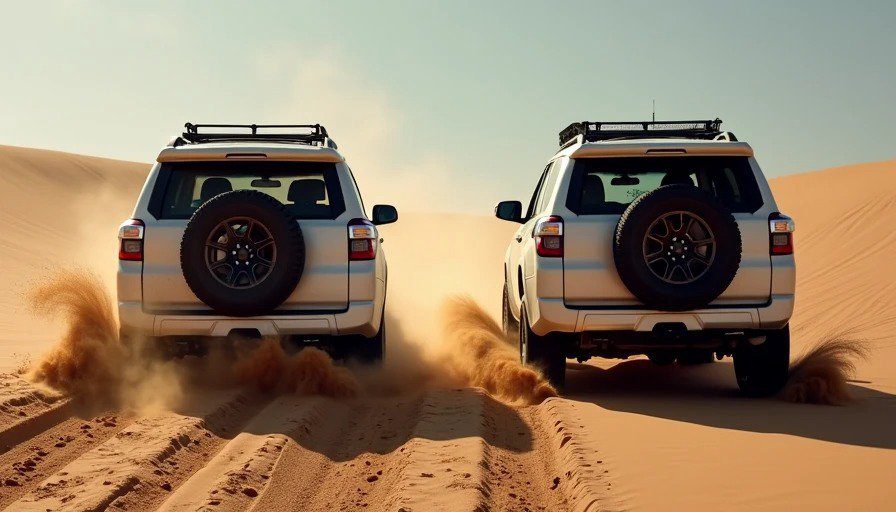
Somewhere along the line, 18 PSI became the default answer for off-road tire pressure.
"Air down to 18." "18 is the sweet spot." "18 works for everything."
It doesn't.
18 PSI might be right for a lightly loaded Jeep on 35s in Moab sand. It might be right for a Tacoma on 33s running a moderate trail in the desert. But it's not right for a fully loaded 4Runner on 37s in mud, and it's not right for a half-ton truck on 35s in rock. The tire pressure that works on one vehicle, on one terrain, on one day is not the pressure that works on another.
Here's the truth: tire pressure is math. It's not a magic number. It's a calculation — and the variables are your vehicle weight, your tire size, your load range, your terrain, and your speed.
I've been running the wrong tire pressure for years. I've aired down too much and bent rims on rocks. I've aired down too little and dug holes in sand. I've run too high in snow and gotten stuck. And I've run too low on pavement and worn out tires in 10,000 miles.
This is what I've learned from all of those mistakes.
Why 18 PSI Became the "Magic Number"
First, let's talk about how 18 PSI became the default.
The logic goes something like this:
Stock tire pressure for most trucks is around 35-40 PSI for pavement.
Off-road requires lower pressure to increase the footprint.
18 PSI is a 50% reduction from stock.
It works well enough for most moderate terrain.
And everyone on the internet says it's the right number.
So it became the default. And it's not entirely wrong — 18 PSI is a safe starting point for many vehicles on moderate terrain. But it's a starting point, not a destination.
The problem is that most people stop at 18 PSI. They don't adjust for conditions. They don't adjust for load. They don't adjust for temperature. They just hit 18 PSI and go.
And then they wonder why they got stuck in sand, or why the ride was harsh on washboard, or why they bent a rim in the rocks.
The Math: How Tire Pressure Actually Works
Here's the simple version of the math:
Tire pressure determines the size of the contact patch — the area of the tire that's actually touching the ground. The contact patch is what gives you traction. A larger contact patch means more traction, but it also means more rolling resistance and more tire flex.
The contact patch is determined by:
Vehicle weight — more weight means more load on the tires, which means a larger contact patch at the same pressure.
Tire size — a larger tire has a larger footprint at the same pressure.
Load range — higher load range tires have thicker sidewalls and require more pressure to flex.
Terrain — soft terrain requires lower pressure for flotation, while hard terrain requires higher pressure for protection.
The formula for a starting pressure is:
(Vehicle weight on that axle ÷ Tire width × Load range factor) × Terrain adjustment
But you don't need to do that math on the trail. You need a rule of thumb that works, and then you adjust from there.
Here's the rule of thumb I use:
Start at 18 PSI for moderate terrain — this is the baseline.
Adjust down for soft terrain — sand, deep mud, snow.
Adjust up for hard terrain — rock, washboard, high speeds.
Adjust for load — more weight means more pressure to maintain the same footprint.
Adjust for tire size — larger tires need lower pressure for the same footprint.
Adjust for temperature — pressure increases with heat.
Terrain-by-Terrain: What Pressure Actually Works
Sand: 12-15 PSI (or Lower)
Sand is the terrain that demands the lowest pressure. The goal is flotation — to spread the weight of the vehicle over a large area so the tires don't dig down into the sand and get stuck.
What works: 12-15 PSI on 33-inch tires, 10-12 PSI on 35s, and 8-10 PSI on 37s. If you're running 33-inch tires in deep desert sand, 10-12 PSI is where I'd start. If the sand is soft, go lower.
What happens if you run 18 PSI: The tire footprint is too small. The tires dig into the sand, you lose momentum, and you get stuck. You might make it through the first few dunes, but eventually the sand will win.
What happens if you go too low: You'll spin the rim inside the tire. This is called "tire slip" or "spinning the bead," and it's a great way to destroy a tire. Don't go below 8 PSI on standard tires unless you're running beadlocks.
My experience: I've run 12 PSI in the Mojave sand and it worked well. I've run 15 PSI in the same sand and gotten stuck. The difference was 3 PSI.
Rock: 15-18 PSI (or Higher)
Rock is the terrain that demands the highest pressure. The goal is protection — to have enough air in the tire to protect the sidewalls and the rim from sharp edges.
What works: 15-18 PSI on 33-inch tires, 18-20 PSI on 35s, and 20-22 PSI on 37s. If you're running 33s on rocks, 16-17 PSI is where I'd start.
What happens if you run 12 PSI: The tire flexes more, which gives you more traction on the rocks. But the sidewalls are more vulnerable, and the rim is more likely to contact the rock and get bent. This is a risk/reward decision: more flex for more traction, but more risk of damage.
What happens if you go too low: You'll dent your rims, pinch the tire sidewalls, and possibly cut a tire. I've done all three.
My experience: I run 16 PSI on rock. It's a balance between traction and protection. On my first Moab trip, I ran 12 PSI and dented a rim. I've run 18 PSI since and haven't bent anything.
Mud: 12-15 PSI
Mud is like sand in some ways — you need flotation to stay on top of the mud and avoid sinking. But it's also different because mud is slick, and you need traction, not just flotation.
What works: 12-15 PSI on 33-inch tires, 10-12 PSI on 35s. The lower pressure gives you a larger footprint and helps the tread grab the mud.
What happens if you run 18 PSI: The tires cut through the mud and sink. You're not floating — you're trenching. You'll get stuck.
What happens if you go too low: You'll sidewall the tire on hard objects in the mud (rocks, stumps, etc.). And you'll spin the bead if you're not careful.
My experience: I've run 12 PSI in Arizona mud and it was fine. But mud varies a lot — clay mud is the worst, and you might need to go even lower. In Louisiana gumbo mud, people run 8 PSI and still get stuck.
Snow: 8-15 PSI
Snow is tricky. It's soft and deep, requiring low pressure for flotation. But it's also cold, and the pressure will drop as the temperature changes.
What works: 8-12 PSI on 33-inch tires, 6-10 PSI on 35s. If you're in deep powder, go lower. If it's packed snow, go higher.
What happens if you run 18 PSI: The tires cut through the snow, and you're driving on the ground, not the snow. You'll struggle.
What happens if you go too low: You'll spin the bead, and the tire might come off the rim. In the snow, the wheel spin can be aggressive because you're trying to get traction, and the bead could break.
My experience: I run 10 PSI in deep snow, 12-15 PSI in packed snow. The difference is night and day.
Washboard: 18-22 PSI
Washboard is the terrain that's hardest on your suspension and your sanity. The goal is to maintain enough pressure to keep the tires from flexing too much and overheating, but not so much that the ride is harsh.
What works: 18-22 PSI on 33-inch tires, 20-24 PSI on 35s. Higher pressure keeps the tire from flexing as much, reducing heat buildup and sidewall damage.
What happens if you run 12 PSI: The tire flexes too much, generating heat, and the sidewalls are at risk of damage from the washboard. You'll also get more "bounce" because the tire is absorbing the washboard, not the suspension.
What happens if you run 25 PSI: The ride is harsh, and the suspension takes all the load. You'll break things.
My experience: I run 20 PSI on washboard. I've run lower (15 PSI) and the ride was awful. I've run higher (25 PSI) and the ride was also awful. 20 is the sweet spot for my setup.
Load: The Overlooked Variable
Here's the thing most people miss: the same tire pressure that works for an empty truck doesn't work for a loaded truck.
If you're running 18 PSI in an empty truck with 33-inch tires, you're probably fine. But if you add 500 pounds of gear, a rooftop tent, a fridge, and a passenger, the tire flexes more. The contact patch increases, and the tire overheats.
Rule of thumb: For every 200 pounds of added weight, add 1-2 PSI to maintain the same footprint. If you're loaded heavy, you need more pressure.
Here's an example:
Empty: 35 PSI pavement, 18 PSI off-road.
Loaded with 800 pounds of gear: 40 PSI pavement, 22 PSI off-road.
The math is simple: add 2 PSI for every 200 pounds of extra weight. It's not exact — but it's a good starting point.
My experience: I run 22 PSI off-road when I'm loaded for a week-long trip. If I'm empty, I run 18 PSI. The difference is noticeable.
Speed: The Overlooked Variable (Part 2)
The faster you're driving, the more pressure you need. Heat is the enemy of tires. Higher speed = more heat = more risk of failure.
Off-road rule of thumb:
Low speed (crawling): Lower pressure works fine.
Medium speed (trail): 18-20 PSI is fine.
High speed (desert running): 22-26 PSI or higher.
My experience: On fast desert roads, I run 22 PSI. The tires don't overheat, and the ride is still compliant. At 18 PSI on the same road, the tires get hot and the sidewalls flex too much.
How to Read Your Tires: What the Wear Patterns Tell You
Here's how to know if you're getting the pressure right — without doing the math.
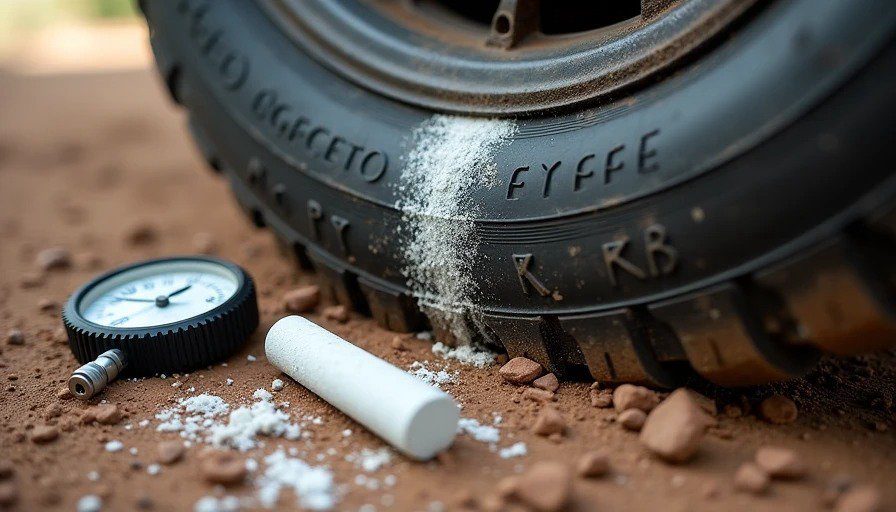
1. The "Chalk Test"
Take a piece of chalk and mark a line across the tread of your tire. Drive the vehicle a short distance (10-20 feet) on dirt, then stop and look at the chalk line.
If the chalk is worn evenly: The pressure is right.
If the chalk is worn in the center only: The pressure is too high.
If the chalk is worn on the edges only: The pressure is too low.
This is the most reliable way to find the right pressure for your specific setup.
2. The "Bulge Test"
When you're at the right pressure, the tire will have a slight bulge at the contact patch. The bulge is visible just above the ground, and the tire tread is flat on the ground. If you see a concave bulge at the sidewall, you're too low. If the sidewall is straight, you're too high.
3. The "Sidewall Flex Test"
While driving on the trail, look at the sidewalls of the front tires as you turn. If the tire sidewalls are flexing excessively and rolling under the rim, you're too low. If they're almost straight, you're too high.
4. The "Return to Pavement" Test
If your tires feel squirmy and vague on the pavement after airing back up to 35 PSI, you may have overheated the sidewalls. This is a sign that your pressure was too low for the speed and load you were running.
The Parts Graveyard Connection: What 12 PSI on Washboard Looks Like
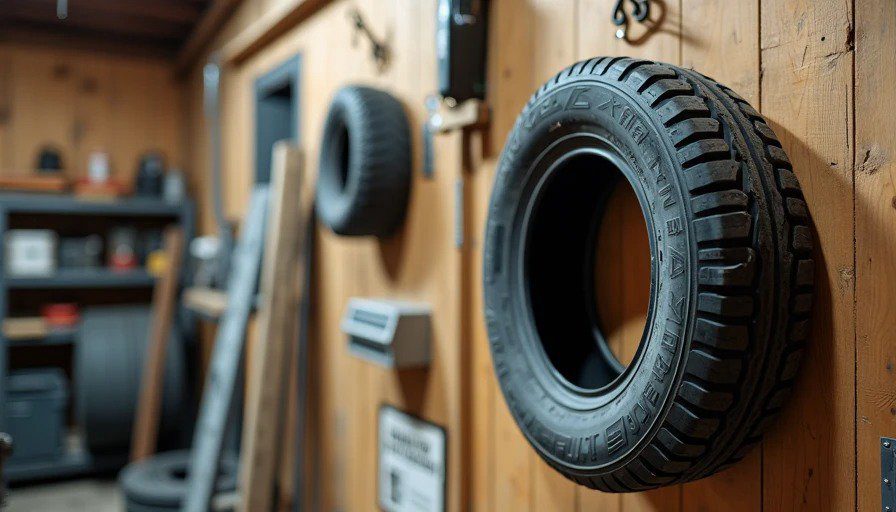
I've got a tire on the wall that failed from running 12 PSI on a washboard road.
The tire was a 33-inch KO2, with 50% tread left. I was running 12 PSI on a desert road in the Mojave at about 30 MPH. The tire overheated, the sidewall cooked, and the tire delaminated. The tread separated from the sidewall, and I ended up with a tire that was still round but had lost half of its structural integrity.
The tag on the wall:
DATE: April 2024
LOCATION: Mojave Desert, California
PART: BFGoodrich KO2 285/70R17, load range E
FAILURE MODE: Heat delamination from running 12 PSI at 30 MPH
CAUSE: Tire pressure was too low for the speed. The heat built up, and the tire failed from the inside out.
LESSON: Tire pressure is speed-dependent. 12 PSI is fine for crawling, but 30 MPH requires 20 PSI or more.
The Takeaway
18 PSI is not a magic number. It's a starting point.
The right tire pressure depends on:
Your vehicle weight
Your tire size and load range
The terrain you're on
Your speed
The temperature
Your load
If you want to get it right, use the chalk test. Adjust the pressure until the chalk wears evenly, and you'll find the right pressure for your setup.
Here's a cheat sheet for the real world:
Terrain | Starting PSI (33s) | Starting PSI (35s) | Starting PSI (37s) |
|---|---|---|---|
Pavement | 35-40 | 35-40 | 35-40 |
Sand | 12-15 | 10-12 | 8-10 |
Rock | 15-18 | 18-20 | 20-22 |
Mud | 12-15 | 10-12 | 8-10 |
Snow (deep) | 8-12 | 6-10 | 6-8 |
Washboard | 18-22 | 20-24 | 20-24 |
Desert (fast) | 20-24 | 20-24 | 20-24 |
But don't stop at the starting point. Adjust, test, and adjust again.
A $30 tire pressure gauge is the best investment you can make for your off-road rig.