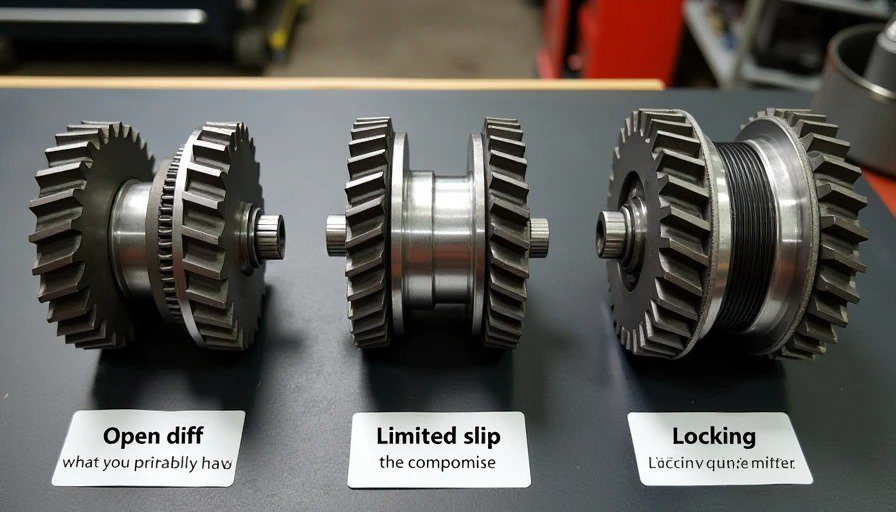
Everybody talks about lockers like they're the holy grail of off-road traction.
And they're right — lockers are incredible. But they're also misunderstood. Most people don't know what a locker actually does, or why they might want limited slip instead, or why the open differential that came in their truck is both terrible and useful at the same time.
Here's the truth: there's no single right answer for every driver, every terrain, and every budget. Each of these diffs does something different, and each one feels completely different on the trail.
I've run all three. I've been stuck with all three. And I've learned exactly what each one does well and where it falls apart.
Let's start with the basics.
What a Differential Actually Does
Before we compare them, let's talk about what a differential is and why you have one.
The differential sits between the driveshaft and the axles. Its job is to do two things at once:
Transfer power from the driveshaft to the wheels
Allow the wheels to turn at different speeds when you go around a corner
That second part is crucial. When you turn, the outside wheel travels further than the inside wheel. If both wheels were locked together on a solid axle, the tires would scrub, the steering would fight you, and you'd wear out your tires in about 5,000 miles. The differential lets the wheels rotate at different speeds so you can turn smoothly.
The problem is that the same mechanism that lets wheels turn at different speeds also lets them spin at different speeds when one loses traction. Hit ice on one side, and that wheel spins freely while the other sits still. You're stuck.
That's what lockers and limited-slip diffs are for — to limit or eliminate that speed difference when you need traction.
The Open Differential: What You Probably Already Have
How it works: The simplest diff. It sends equal torque to both wheels, but if one wheel loses traction, it spins freely and all the power goes there. The wheel with traction gets nothing.
Where it works well: Paved roads. Highway driving. Light dirt roads. Gas mileage. Pretty much every street-driven vehicle on the planet has open diffs from the factory because they're cheap, reliable, and good enough for pavement.
What it feels like on the trail:
Sand: You hit a soft patch. One rear wheel starts to spin. It digs. The other wheel sits there like it's on vacation. You're stuck. You air down, try again, and maybe you get lucky. If not, you're digging.
Rock: You lift a tire. It spins in the air. The other tire — the one on the rock — doesn't move. You're stuck until you get out, stack rocks, and try again. People call this "open diff hopping" because you'll bounce the truck trying to get the spinning tire to gain enough momentum to catch.
Mud: One tire hits a slick spot. It spins. Mud flies. The other tire does nothing. The spinning tire digs deeper, and now you're sunk to the frame. This is where open diffs are the most frustrating — the spinning wheel is actively making the situation worse while the wheel with traction sits there useless.
Snow: Same as mud. One wheel spins on ice, the other sits on pavement, you're not moving. You learn to carry chains or momentum.
What you can do about it: Some people use the brakes to apply resistance to the spinning wheel, which transfers some torque to the other side. It works — a little. You can feather the brake and throttle at the same time and get a poor man's traction control. It's not great, and it heats up your brakes, but it can get you out of a bind.
When an open diff is the right choice: If you drive a truck that lives on pavement 95% of the time and you just need to get to the trailhead, an open diff is fine. It's also great for towing, as it doesn't bind up on pavement like lockers can. And it's cheap.
The verdict: Open diffs are a liability on any serious trail. You'll get stuck more often, you'll dig deeper, and you'll work harder to get out. If you're going off-pavement with any regularity, upgrade.
The Limited Slip Differential: The Compromise
How it works: A limited slip diff uses clutches, cones, or gears to transfer torque to the wheel with more traction. When one wheel starts to spin, the mechanism inside the diff sends a percentage of the torque to the other wheel. It's not a full lock — usually 25-50% of the torque — but it's more than an open diff will give you.
Where it works well: On-road in wet or snowy conditions. Light dirt trails. Moderate terrain where you need a little extra help but not a full lock.
What it feels like on the trail:
Sand: You hit soft sand. The rear wheels both spin a little, but they don't dig as fast. You can feel the diff working — you give it throttle, one wheel spins, then the other catches, and you move forward. It's not instant, and you can feel the "catch" happen. In deep sand, it's better than open but not as good as a locker.
Rock: A tire lifts. You feather the throttle. The limited slip senses the speed difference and sends torque to the other wheel. There's a delay — you can feel the diff engaging and disengaging as you go. On the rocks, it's better than open but frustrating if you're on anything technical. The delay and inconsistency make it hard to crawl smoothly.
Mud: Both rear tires spin, but the one with traction gets some power. You're moving, but you can feel the diff working and not quite locking. In deep mud, a limited slip is better than open but you'll still spin one wheel more than the other. You'll get through most mud, but you'll work at it.
Snow: This is where limited slips really shine. On snow-covered pavement, a limited slip gives you controlled power delivery without the abrupt locking that can break traction and spin you out. It engages gradually, which is safe and predictable in winter driving. Better than open, safer than a locker.
What you can do about it: If you have a limited slip that's worn out, the clutches may slip and it'll start acting like an open diff. You can rebuild limited slips — new clutches and springs — and bring them back to life. Check the wear and the preload.
When a limited slip is the right choice: If you do mostly snow driving, wet roads, and light trails, a limited slip is a great choice. It's the best on-road diff for poor conditions, and it's more than capable for moderate off-road use. It's also more forgiving than a locker — it won't break traction suddenly, and it won't bind up on pavement.
The verdict: Limited slips are a compromise. They're better than open diffs on the trail and better than lockers on the pavement. They work in more conditions than either extreme. If you do a mix of on-road and off-road, limited slips are a solid choice. Just know that in serious off-road situations, they'll hold you back.
The Locking Differential: The Heavy Hitter
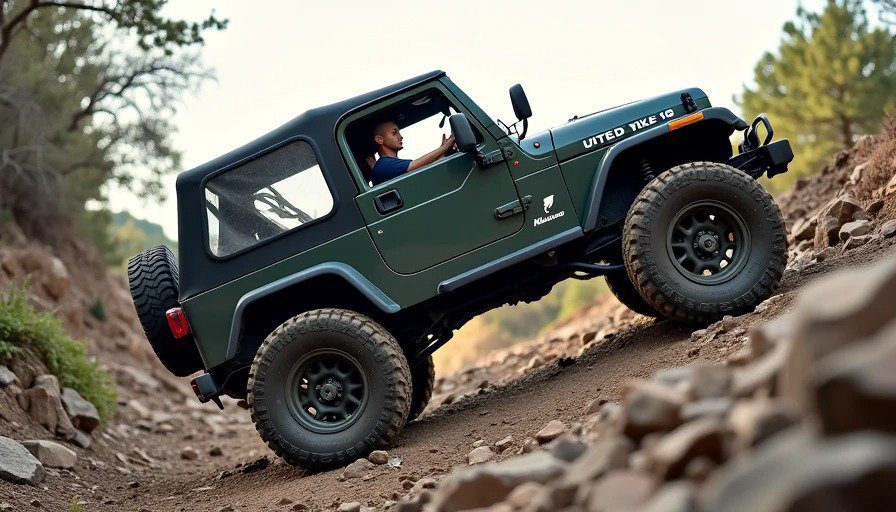
How it works: A locker locks both wheels on the axle together — they spin at the same speed, no matter what. When engaged, power is split 50/50 between both wheels at all times.
There are two main types:
Selectable lockers (ARB Air Locker, Eaton E-Locker): Engage when you flip a switch. Off when you don't need them. The best of both worlds.
Automatic lockers (Detroit Locker, Lock-Right): Engage and disengage automatically based on torque. Always on in some form. They can be harsh on pavement but simple and bulletproof.
Where it works well: Off-road. Everywhere. Rocks, deep mud, sand, snow. It's the gold standard for traction.
What it feels like on the trail:
Sand: You hit soft sand. Both rear wheels dig together. You move forward without digging. The truck doesn't sink — it climbs. Deep sand that would stop an open diff becomes manageable. You can run higher tire pressure and still make it through. The rear end feels planted and you can steer with the throttle, not just the wheel.
Rock: This is where a locker is magic. You lift a tire, even a front tire with a front locker, and the truck still moves forward. You can crawl over obstacles with both wheels on the ground and one in the air, and the truck just keeps moving. You have to be careful — a locker on rock will find traction on the tire that's still on the ground, but you'll break things if you don't use it carefully. Use a locker, and you'll crawl up things that would stop an open diff dead.
Mud: Deep mud, one wheel on a slick spot, the other on something solid? The locker sends power to both. You don't spin one tire — you push through. On mud, a locker is aggressive. Both rear wheels will dig and you'll get through. But watch your wheel speed — too much throttle and you'll trench in deep.
Snow: This is tricky. A locked axle on snow at speed will break traction suddenly and spin you out. On pavement in snow, an open or limited slip is safer. But in deep snow, a locker is invaluable — you're moving, not spinning, because both wheels are digging and pushing together. You can drive through two feet of snow with a rear locker and good tires.
What you can do about it: On a selectable locker, if it doesn't engage, check the electrical connection or the air line. On an automatic locker, if it's banging and clicking, you might need to adjust the preload or check the wear. Lockers need maintenance — don't just install them and forget them.
When a locker is the right choice: If you're serious about off-road, a locker is the answer. If you run trails where you regularly lift a tire or spin a wheel, you need a locker. If you're building a dedicated off-road rig, lockers front and rear are the gold standard.
The verdict: A locker is the most effective traction aid you can buy for off-road. It's not for everyone — the cost, the installation complexity, and the on-road behavior can be a lot for a daily driver. But if you want to get unstuck before you get stuck, lockers are the answer.
Side-by-Side Comparison: What You Actually Feel
Here's a table that summarizes the experience:
Terrain | Open Diff | Limited Slip | Locking Diff |
|---|---|---|---|
Sand | Spins, digs, stuck | Better, catches, moves | Digs together, climbs |
Rock | Lifted tire spins, you're stuck | Delayed engagement, unpredictable | Creeps up and over, no drama |
Mud | Spins one tire, trenching | Works, but still spins | Pushes through, no trenching |
Snow (deep) | Spins, goes nowhere | Better, but still struggles | Digs and goes forward |
Snow (pavement) | Fine, predictable | Safer, controlled | Unpredictable, can break traction |
On-road behavior | Smooth, predictable | Smooth, slightly different | Heavy steering, binding on turns |
Off-road performance | Poor | Fair | Excellent |
What I Run and Why
On my 4Runner, I run a selectable rear locker and leave the front open. Here's why:
Rear locker gives me traction when I need it. It's the most important axle to lock for most situations.
Front open saves weight and complexity, and it's less likely to break an axle. If I need the front, I use the brake trick or I choose my lines carefully.
Selectable means I can turn it on and off. On pavement, it's an open diff and drives normally. On the trail, I engage it when I need it — and only when I need it.
Most of the trips I run are moderate to hard. I've never wished for a front locker, but I've definitely wished for a rear locker on trips where I didn't have one. The rear locker is the single most effective upgrade for any off-road vehicle.
That said, if you're building a dedicated rock crawler, go lockers front and rear. The cost is higher, but the capability is unmatched.
The "Parts Graveyard" Connection
I've seen more broken differentials than I can count. Here's what I've learned from the ones that ended up on my wall:
An open diff that grenaded from a sudden shock load — a piece of the ring gear broke loose and took out the case. Cause: running 37s on a stock Dana 30 axle. The gears weren't strong enough for the tires.
A limited slip that wore out and started acting like an open diff. The clutches were glazed, the preload was gone. Cause: age and 80,000 miles of use with no service.
An automatic locker that came apart in the housing and seized both axles on the trail. Cause: improper preload during installation. The thrust washers wore out and the locking mechanism got misaligned.
A selectable locker that failed to engage and stayed unlocked. Cause: an air line got pinched, and the pressure wasn't enough to lock the diff. Trailside fix: a piece of rubber hose and a zip tie held the line together long enough to lock it and get out.
What's the lesson? Differential parts don't break because they're bad. They break because the rest of the system isn't ready for them. Gear sets need to be matched to tire size and driving style. Lockers need to be installed correctly and maintained regularly. And you need to know what you have, how it works, and what it needs.
If you don't know, you'll learn. Sometimes that lesson comes on the trail, and that's the most expensive way to learn it. I've got the parts on the wall to prove it.
What You Should Buy
Here's my recommendation, broken down by use case:
1. Daily driver that sees light trail duty (fire roads, light off-road, logging roads):
Keep the open diff that came with your truck.
Add a rear limited slip if you drive in snow.
That's it.
2. Weekend warrior (moderate trails, some rock crawling, occasional mud):
Rear selectable locker.
Leave the front open or add a limited slip.
This covers 90% of what you'll do without breaking the bank.
3. Serious off-roader (rock crawling, deep mud, 37s+, Moab, Rubicon):
Lockers front and rear.
Selectable or auto, but match them to your build.
Re-gear to match your tire size.
You're not in the cheap seats anymore.
4. Overlander (expedition-style travel, long trips, variety of terrain):
Rear selectable locker.
Front open.
Focus more on recovery gear than a front locker.
5. Pavement princess with the occasional dirt road:
Open diff. Save your money.
Put the money into better tires, not a diff you won't use.
The Takeaway
The right differential for you depends on your vehicle, your terrain, and your driving style. There's no universal answer.
But here's what I can tell you from 12 years of installing these things and breaking them on the trail:
Open diffs are cheap and reliable, but they'll leave you stuck in sand, mud, and snow.
Limited slips are the best on-road compromise, but they're not enough for serious off-road.
Lockers are the gold standard for traction, but they're expensive and can be tricky on pavement.
Choose your terrain. Choose your budget. Choose your vehicle. Then choose the right diff for the job.