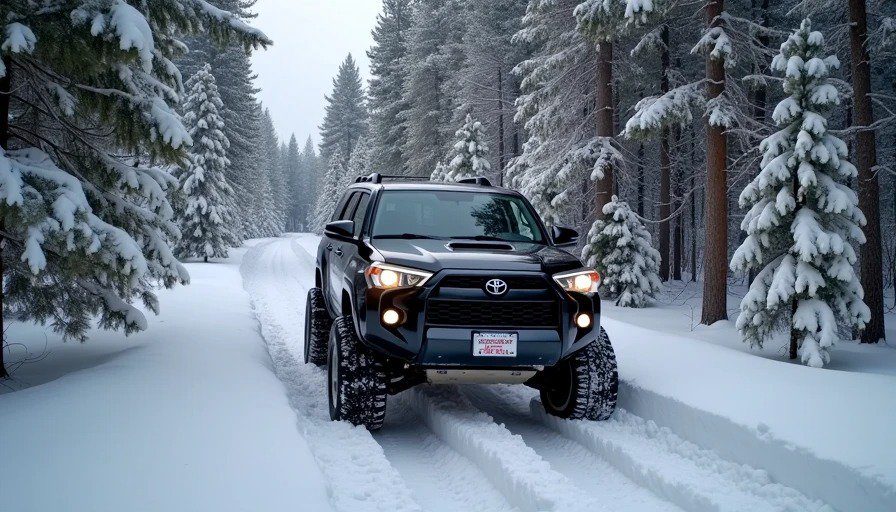
I live in Flagstaff because it puts me at the intersection of three things I can't live without: the Mojave Desert, the edge of the Grand Canyon, and the backcountry of southern Utah.
But there's a fourth thing I didn't plan for when I moved here: winter.
Flagstaff sits at 7,000 feet. When it snows, it snows. The forest turns white, the trails disappear, and the terrain you ran in July becomes a completely different animal. Rocks get hidden. Ruts get filled. And hills that were easy in the dry become technical climbs in the snow.
I've been wheeling in Coconino National Forest for five winters now. I've learned a few things — mostly by getting stuck and having to figure out how to get unstuck.
This trip happened last February. It was supposed to be a simple overnight run up Forest Road 171, a moderate trail that I'd run a dozen times in the summer. The snow was supposed to be light, maybe four to six inches.
It was eighteen inches. And it humbled me.
The Setup: Forest Road 171, February 2025
Vehicle: My 4Runner, with the full build — 2.5-inch lift, 33-inch KO2s, rear locker, winch, full armor. I'd run this trail before. I was confident.
Weather: Clear skies, 20 degrees Fahrenheit, no wind. The snow had fallen two days earlier and hadn't been driven on since. We were the first tracks.
The plan: Drive from Flagstaff east on I-40 to the FR 171 turnoff, run the trail up to the ridgeline, camp for the night, and come back the next morning. Easy. Or so I thought.
The First Sign of Trouble: The Snow Was Deeper Than Expected
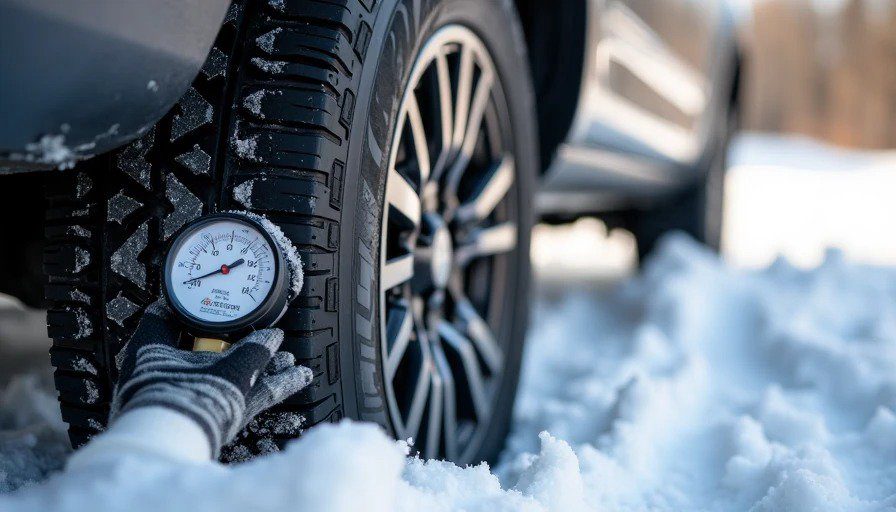
The turnoff from I-40 was clear. The first mile of FR 171 was packed snow, maybe six inches deep — manageable. I was aired down to 18 PSI, in 4-Hi, and the truck was tracking well. No issues.
By mile three, the snow was deeper. Twelve to fourteen inches. I dropped to 4-Lo and aired down to 12 PSI. The truck was still moving, but I could feel the snow building up under the chassis. The skid plates were dragging. The approach angle — the clearance between the front bumper and the ground — was disappearing.
That's the thing about snow. It doesn't just sit there. It builds up. It compacts under your tires, but it also pushes up into the wheel wells, under the bumpers, and against the frame rails. The clearance you had at the start of the trip shrinks with every mile.
I stopped to clear the snow out of the front bumper and around the suspension components. The approach angle was down to maybe 15 degrees. The approach angle — the angle between the ground and the front bumper — had been reduced by the snow pack. What had been a moderate hill in the dry was now steeper because the snow had filled in the transition.
The Climb: Where It All Went Wrong
The trail steepened as it climbed toward the ridge. This section was usually a 15- to 20-degree slope, with good traction on the loose rock. In the snow, it looked like a smooth white ramp. I didn't think it would be an issue.
I hit it in 4-Lo, first gear, 12 PSI. The truck climbed about 50 feet and then stopped. The wheels kept turning, but the truck wasn't moving forward.
What was happening: The snow had compacted under the front tires, but the rear tires were on a different angle. The approach angle was gone — the front bumper was pushing snow, not riding over it. The weight of the truck was on the snow, not the ground.
I tried backing up and hitting it with more speed. The truck got another 20 feet before it stopped again.
The problem: 4-Lo and low tire pressure weren't enough because the snow had changed the terrain. The slope wasn't the same slope anymore — the snow had filled in the voids and created a smooth, slippery surface with no traction. The tires were spinning on packed snow, and the packed snow was 18 inches deep, pushing up against the frame and the skid plates.
I was stuck. Not because the truck wasn't capable — but because the snow had completely changed the geometry of the trail.
The Recovery: Two Hours in 20 Degrees
The winch was my only option. But the winch was useless without an anchor. The nearest tree was 150 feet away — too far for the 100 feet of synthetic rope I was running. I'd need to use a snatch block to double the line length and reduce the load.
Step 1: I unspooled the rope, set the snatch block around the tree, and ran the rope through it. The winch would now pull at half the speed but twice the effective length.
Step 2: With the snatch block in place, I could pull from 150 feet away. I engaged the winch, and the truck slowly moved forward. The snow was packed under the chassis, and the winch was pulling against the resistance of the snow and the incline. It was a slow recovery.
Step 3: I winched the truck up the hill, resetting the snatch block twice as I moved up. The whole recovery took two hours, with me working in 20-degree weather, clearing snow from the winch and the suspension components, resetting the snatch block, and trying to keep my fingers warm.
What broke: Nothing. But I learned that a winch is only as good as the anchor you have. And on a snow-covered trail, anchors are harder to find because the snow hides them.
The Science: What Snow Actually Does to Your Approach Angle
Here's what I learned from that climb — and what you need to know before you head into the snow.
Snow Changes Your Approach Angle
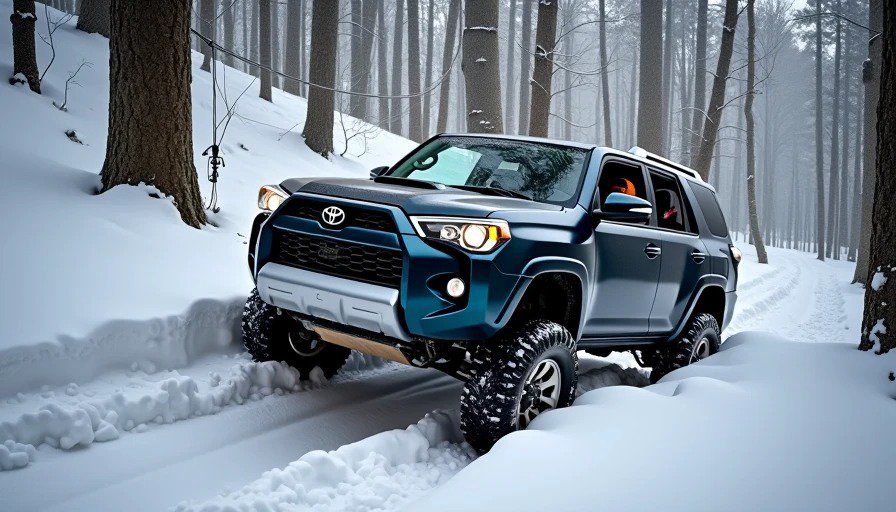
In dry conditions, your approach angle is the angle between the ground and the front bumper. On a 20-degree slope, with a vehicle that has a 30-degree approach angle, the front bumper is clearing the ground by 10 degrees. You're fine.
In the snow, the approach angle is reduced because the snow is piled up in front of the bumper. The snow pushes up against the bumper and the skid plates, effectively lowering the clearance. What was a 20-degree slope with a 30-degree approach angle becomes a 20-degree slope with a 15-degree approach angle because the snow has reduced the effective clearance.
The math: The factory approach angle on a 5th-gen 4Runner is about 30 degrees. With a 2.5-inch lift and aftermarket bumper, it's closer to 35 degrees. In 18 inches of snow, that approach angle is reduced by the snow depth. The effective approach angle is now the angle between the vehicle and the snow surface — which is only 5-10 degrees. That's why the front bumper acts as a plow and the truck stops.
Snow Changes Your Departure Angle
The same thing happens at the rear. The rear bumper and the spare tire carrier can drag in deep snow, acting as a drag anchor.
Snow Changes Your Traction
Snow is unpredictable. Fresh powder offers zero traction. Packed snow offers some traction, but it's inconsistent. Ice under the snow offers zero traction. And the snow surface changes with temperature: cold snow is gritty and can offer moderate traction; warmer snow is slicker.
When you air down to 8 PSI, you're trying to increase the footprint of the tire. In sand, that works — the tire creates a larger floatation footprint and rides on top of the sand. In snow, it works too, but not as well because the snow is deeper and the weight of the vehicle pushes through the snow to the ground. You get traction when the tires reach the ground. Until then, you're floating on snow.
That's why 8 PSI in 18 inches of snow doesn't help as much as you'd think. The tires can't reach the ground because the snow is too deep. The weight of the vehicle is carried by the snow, not the tires.
Snow Changes Your Center of Gravity
Snow builds up under the chassis, raising the vehicle's center of gravity. With 18 inches of snow under the frame, the truck is effectively lifted higher, making it more tippy on uneven terrain.
What to Do Differently: Practical Advice for Winter Wheeling
Here's what I learned from that trip and the trips before it.
1. Know the Snow Depth Before You Go
Check the snow report. Call the ranger station. Ask the locals. If the snow depth exceeds your ground clearance, you're going to have problems. My 4Runner has about 12 inches of ground clearance in the front (with the lift and the bumper). On 18 inches of snow, I was pushing snow with the front bumper and dragging the skid plates. That's a recipe for getting stuck.
Ground clearance rule of thumb: If the snow depth is more than 75% of your ground clearance, you're going to plow and drag. At 100% of your ground clearance, you're not going to make it without a winch.
2. Air Down, But Not Too Much
In snow, 8 PSI is a good starting point, but it's not the solution. If the snow is deep enough that the tires can't reach the ground, lower pressure doesn't help. You're floating on the snow, not contacting the ground.
A better approach: Air down to the point where the tires flex enough to grip, but not so low that the rim is the lowest point of contact. In moderate snow (6-12 inches), 12-15 PSI is often the sweet spot. In deep snow (18+ inches), you're better off with a wider tire and lower pressure.
3. 4-Lo Is Not the Solution to Everything
Low range gives you torque and control, but it doesn't give you traction. If the tires can't grip, 4-Lo won't help. In snow, you need traction, not torque.
When to use 4-Lo in snow: On steep climbs where engine braking is needed. On technical sections where you need to crawl. On descents where you need control. But if the tires are spinning, you need to air down, change your line, or find a different route.
4. Carry a Shovel and a Recovery Board
This is the most important piece of advice: carry a shovel and recovery boards (Maxtrax or similar). In deep snow, you'll often need to dig out the snow from under the tires and the chassis before you can move. The shovel is your first line of defense.
Use the recovery boards: Place them under the tires to give the tires a surface to grip. In deep snow, the tires may be sitting on the snow, not the ground. Recovery boards give them traction.
5. Bring Extra Clothes
This one's obvious. But I was working in 20-degree weather without gloves, and my fingers went numb. That slows down the recovery. Bring multiple sets of gloves, a warm hat, and dry clothes. You'll get wet clearing snow.
6. Know Your Anchors
In a snow-covered forest, you don't always have a tree to anchor to. Sometimes you have to use a deadman anchor — a strap wrapped around a log or a rock. Sometimes you have to winch from a tree 150 feet away.
Carry a long tree strap: 20 feet minimum. And know how to use it.
7. Carry Enough Water and Food
If you're stuck for two hours, you're going to need water and food. I had them. But I didn't need them for the two-hour recovery. I needed them for the four extra hours of being stuck. Always carry more than you think you need.
What I Learned From This Trip
The truck made it up the hill. We camped that night, and the next morning, we drove down the trail in fresh powder, using a completely different approach.
My mistakes:
I underestimated the snow depth. 18 inches vs. 6 inches was the difference between a drive and a recovery.
I didn't bring a shovel. I had one in the recovery kit, but I didn't bring it on the trip. I was lucky to have enough rope to reach the tree. Without it, I would have been stuck.
I didn't bring recovery boards. I'm buying a set after this trip. They would have saved me two hours.
I didn't carry a long enough recovery rope. I had 100 feet of rope and a snatch block. The tree was 150 feet away. I was lucky that I could use the snatch block to extend the rope. If I'd had 150 feet of rope, the recovery would have been faster.
I didn't start with the right tire pressure. 18 PSI was too high for 18 inches of snow. I should have started at 12 PSI and worked down from there.
What the Parts Graveyard Doesn't Show
This trip didn't break any parts. No broken CVs. No broken winch. No bent control arms.
But it taught me a lesson that's not on the wall: snow changes the game completely, and you can't plan for it like you would any other terrain.
The approach angle, the departure angle, the traction, the center of gravity — all of it changes. And the most capable truck in the world is only as capable as the driver's ability to adapt to those changes.
If you're in the winter, and the snow is deep, don't assume that your 4-Lo and your locker and your winch will get you through. Aired down tires and low range won't solve everything. Sometimes you need a better line, a better anchor, or a better day.
This was a good day. And I got out. But I learned that a 4-Lo and a low tire pressure aren't always the answer.
And the winch? It was the answer — but only because I had an anchor and a snatch block and enough rope.