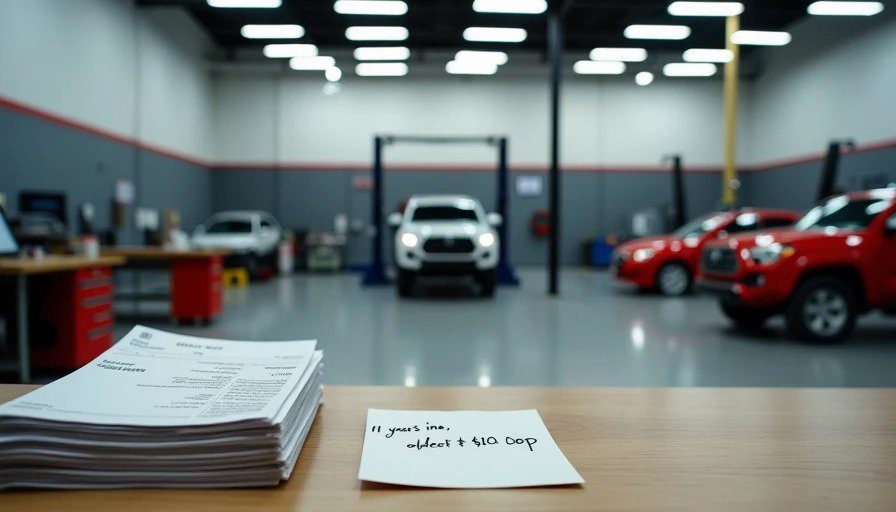
The shop was quiet. That was rare.
It was a Tuesday afternoon, mid-summer, the kind of Arizona day where the pavement shimmers and you can see the heat rising off the asphalt. The shop had four bays, and three of them were empty. The fourth had a Tacoma on the hoist, waiting for a front diff rebuild that I'd started that morning. The customer had dropped it off two weeks ago and wasn't in a hurry. That was even rarer.
I was standing at the parts counter, staring at a stack of invoices. Over $40,000 worth of parts ordered in the last month. Lift kits, lockers, bumpers, winches, lights, armor. All of it going into trucks that would spend most of their lives on pavement. Some of them wouldn't see dirt at all.
I'd been in the shop for eleven years at that point. Eleven years of working my way up from sweeping floors to running the place as technical director. Eleven years of installing parts, diagnosing problems, and explaining to customers why their truck needed something they hadn't planned for.
And on that Tuesday afternoon, for the first time in a decade, I realized I didn't want to do it anymore.
The Early Years: Sweeping Floors and Learning Everything
I started at the shop when I was 19. I was a kid who loved trucks and didn't know anything about them. I'd spent my high school years working on my own rig — an old Toyota pickup that I'd bought for $800 and kept running with duct tape, zipties, and stubbornness.
The shop owner, an old-school mechanic named Frank, took me on because I showed up on time and didn't complain about sweeping floors. The first year was all cleanup. I swept, mopped, organized tools, and watched. I learned by watching the senior techs work. I'd hand them tools and ask questions. "What's that called?" "Why are you torquing that to 85 foot-pounds?" "What happens if you don't use the locktite?"
After a year, Frank let me start doing oil changes. Then brakes. Then suspension work. Within three years, I was doing full lift kit installations, axle rebuilds, and wiring. I was hungry. I wanted to learn everything.
Frank was a good teacher. He didn't explain things twice. If you didn't catch it the first time, you missed it. But he also trusted me with work that other shops would have kicked up to a senior tech. By year five, I was running the shop floor — managing the other techs, ordering parts, talking to customers, and working on the hardest jobs myself.
By year eight, I was the guy customers asked for. I was the technical director. I'd made it.
The Middle Years: Installing Other People's Dreams
Here's what I didn't realize at the time: the work I was doing wasn't mine. It was other people's.
Every lift kit I installed belonged to someone else. Every bumper I welded onto a frame was for someone else's adventure. Every winch I mounted was going to pull someone else's rig out of the dirt. Every locker I dropped into a diff was going to unlock someone else's capability.
I was building these trucks, but I wasn't driving them. I was building the capability to go places that I wasn't going. And I was doing it for people who, more often than not, would never take those trucks to the places they said they were going to go.
I remember a customer who came in to have a full suspension kit, lockers, and armor installed on his 4Runner. He spent $18,000 on parts and labor. He picked it up and said he was going to drive it to Alaska. Two years later, he brought it back in for an oil change with 8,000 miles on the clock and not a single scratch on the skid plates.
I remember another customer who bought a Rubicon, spent $10,000 on upgrades, and drove it to the mall and back for three years. When I asked him why he'd spent the money, he said, "Because I might need it someday."
I couldn't blame them. It was their money. But I started to wonder: what was I building? And why wasn't I building my own?
The Turning Point: When the Questions Started
The questions started in year nine.
"Why are you doing this?"
"Whose adventure are you building?"
"When are you going to drive one of these trucks out into the dirt?"
I didn't have good answers. I was working 60-hour weeks, running the shop, managing the techs, and dealing with customers. I was making good money. I owned a house. I had a stable life. I'd built a career.
But I hadn't built a life. I was building someone else's.
The turning point came on that Tuesday afternoon, staring at the stack of invoices. I realized I'd spent a decade installing parts for other people and had no real adventures of my own. I'd been to the trailhead, but I hadn't taken the trail.
I couldn't point to a single trip that I'd taken in the last five years that was just for me. A trip where I wasn't responsible for someone else's truck, someone else's safety, someone else's schedule. A trip where I could just go and see where the trail took me.
That was the moment I decided to quit.
The Exit: No Drama, No Fight, Just a Conversation
I didn't walk out. I didn't burn bridges. I had a conversation with Frank, the owner.
"Frank, I need to take a break."
"How long?"
"I don't know. Maybe a year. Maybe two. I need to go drive my own truck for a while."
He nodded. He didn't ask for an explanation. He'd been in the business for 40 years. He'd seen it before. Young guys who spent their lives in the shop, building other people's rides, and never taking their own.
"Take as much time as you need," he said. "The door's open when you're ready."
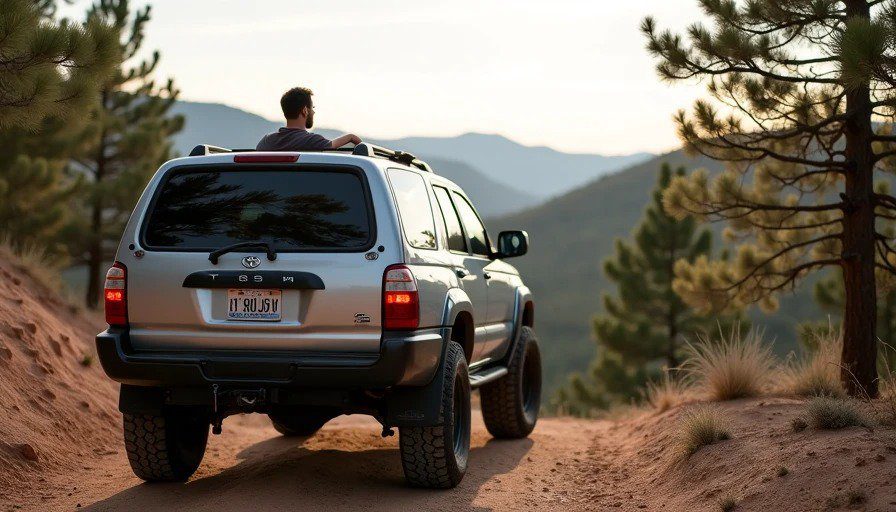
I packed up my tools, said goodbye to the guys, and drove home. I had a 2003 4Runner that I'd bought four years earlier and barely touched. It was stock, minus a set of tires. I'd never taken it off road.
The next weekend, I drove it up a dirt road in the Coconino National Forest. Just a simple trail, nothing technical. I parked at the top of a hill, looked down at the valley, and realized I'd been building trucks for other people for a decade, and I'd never once done this for myself.
I wasn't mad. I wasn't sad. I was just awake.
The First Year: Breaking My Own Stuff
The first year out of the shop was humbling. I broke things that I'd installed a hundred times. I got stuck in places I'd told customers to avoid. I discovered that knowing how to install a part is not the same as knowing how to drive it.
Here's what broke in the first year:
A CV axle in the Mojave
A rear leaf spring on a Utah trail
A vacuum line on a Colorado mountain pass
A tire from running too low a pressure at highway speed
A battery from running the lights too long without the engine running
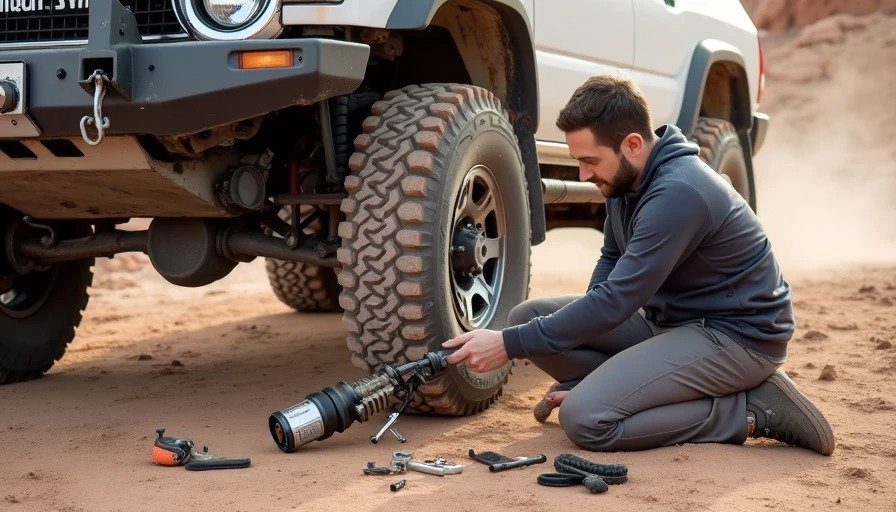
Each failure was a lesson. Every time I broke something, I had to fix it myself, at the trailhead or back at the house. I didn't have a shop full of tools or a parts catalog at my fingertips. I had what I carried in the truck.
I learned more in that year than I had in a decade of shop work.
I also learned that breaking your own stuff is more satisfying than installing someone else's. There's no customer to apologize to. No estimate to write up. No invoice to send. You just fix it and keep going.
And when you fix your own rig, you know exactly what parts you're using and why.
The Second Year: Guiding Others
After a year of solo trips, I started leading small groups. Friends, friends of friends, people who wanted to see the backcountry but didn't have the experience to go alone.
I wasn't charging at first. I was just guiding — showing people where to go, what to pack, how to drive. I did it because I liked it. I liked sharing the trail, the scenery, the experience. I also liked knowing that I could keep people safe and get them out of trouble if something went wrong.
After a few trips, people started asking if I'd do it professionally. I wasn't sure at first. Guiding is a different business than wrenching. You're responsible for people's safety, not just their vehicle. You need to know the trails, the weather, the permits, the risks.
I took a Wilderness First Responder course, got my amateur HAM radio license, and built a satellite communication system into my 4Runner. I put together a proper first-aid kit, a full recovery setup, and a backup plan for everything.
By year two, I was leading paid trips. Small groups, three to five vehicles, three to ten days. I was making less money than I'd made in the shop, but I was making enough to get by. And I was making more memories than I'd made in a decade behind the counter.
The Decision: Not Going Back
After three years of guiding, Frank called me.
"The door's still open. You want to come back?"
I thought about it. The shop was stable. The money was good. I could walk back in tomorrow and pick up where I'd left off.
But I knew I couldn't. The shop was what I'd done, not who I was. I was a guide now. I drove my own truck, broke my own parts, fixed my own failures. I'd built a life that was mine.
I thanked Frank and told him I wasn't coming back.
We still keep in touch. He sends me parts sometimes, and I send him photos of the rigs I work on.
What I Learned
Twelve years in the shop taught me how to build a truck. The years after taught me how to drive one.
Here's what I learned from quitting:
1. You can't build someone else's dream and expect it to satisfy you.
I spent a decade installing parts for other people. I was good at it. But it wasn't mine. The satisfaction was temporary. The dissatisfaction was constant.
2. The trail is more rewarding than the bench.
There's a difference between knowing how a part works and knowing how it feels on the trail. I knew the specs and the torque values, but I didn't know what it felt like to run that part through a washboard at 30 mph or a rock garden at 1 mph. I do now.
3. Breaking your own stuff is better than installing someone else's.
When you break your own rig, you learn exactly what failed and why. You know what part you used and what conditions you subjected it to. That knowledge is more valuable than any catalog or reputation.
4. The people are the best part.
The shop had customers. The trail has friends. The difference is everything. On the trail, you're all in it together. There's no bill at the end. Just shared experience and a story you'll tell around a campfire.
5. You can always go back.
I could go back to a shop tomorrow. I could walk in and start installing parts again. But I won't. Because I know now what I didn't know then: there's more to life than building someone else's truck.
The Parts Graveyard Connection
The Parts Graveyard wall is full of parts that came off my own rig.
That's the real difference between me and the guy I was in the shop. I have a wall full of parts that I broke myself. I can tell you exactly where each one failed, what the conditions were, and how I fixed it. Not because I installed it on someone else's truck, but because I drove it until it broke.
And that's the story I'm telling with every entry on this wall. Not "this part is bad." But "this part broke on this trail, at this temperature, in these conditions, and here's what it taught me."