I installed the roof rack in March of last year. It was a full-length rack from a brand I'd used before and trusted. Heavy-gauge steel tubing, welded joints, and a powder coat finish in textured black. It looked clean, felt solid, and was supposed to last a lifetime.
I bolted it onto my 4Runner's factory roof rails, strapped on my RTT and awning, and headed out for the season. I put 8,000 miles on it over the next 14 months — the Mojave, Utah, Colorado, and a lot of Forest Service roads in Arizona. I didn't think about the rack at all. It was just there. It held my gear. It did its job.
Then, a few weeks ago, I was up on the roof, strapping down a cooler before a trip, and I saw it.
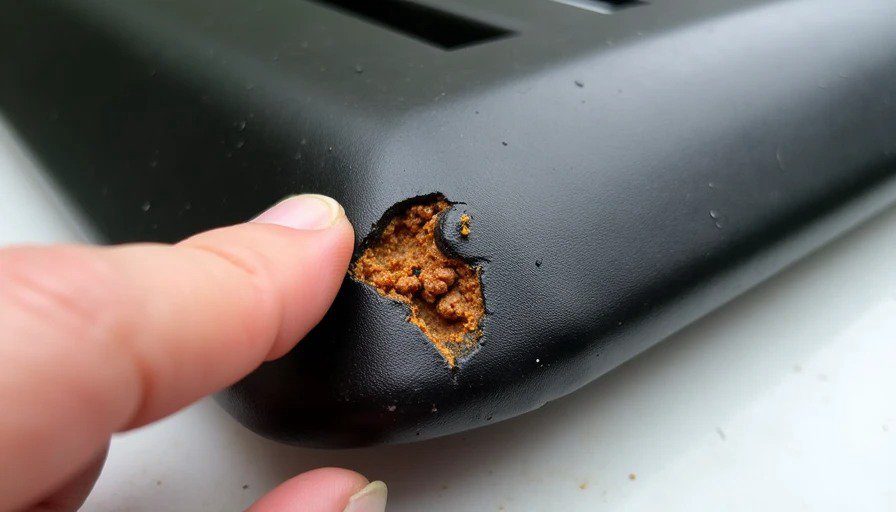
Bubbling. Under the powder coat, on the trailing edge of the rack, right where the wind hits it at speed. Little blisters in the finish. Underneath them, orange-brown rust.
I pressed my thumb against one. The powder coat crumbled off like old cornflakes, revealing a layer of rust underneath. I checked the rest of the rack and found similar blisters at every weld, every bolt hole, and every place where the rack met the roof.
It was 14 months old. I'd paid over $800 for it. And it was already rusting.
The Discovery: What I Found
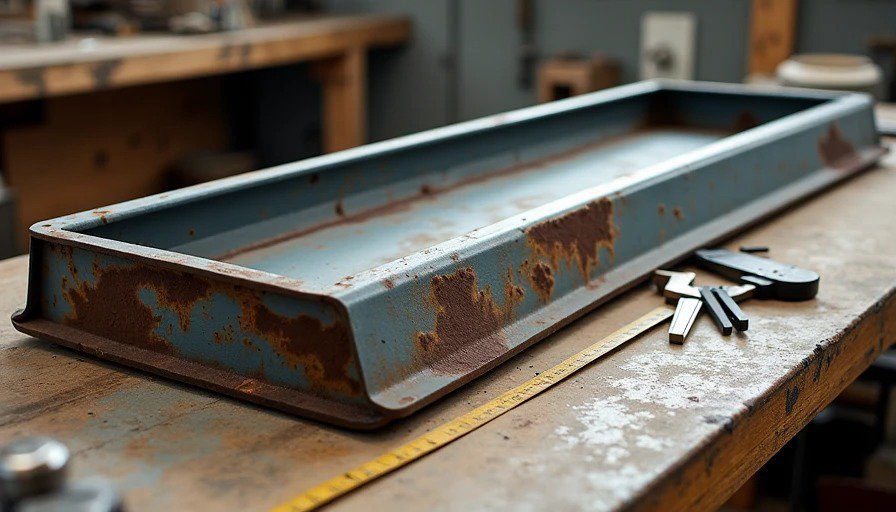
I pulled the rack off the truck and laid it out on the workbench. The powder coat that had looked so good on installation day was failing everywhere.
Where the rust was worst:
At the welds: Every single weld had rusted first. The powder coat had cracked at the edges of the welds, and the rust had crept under the coating.
At the mounting points: Where the rack bolted to the factory roof rails, the powder coat had chipped from vibration and the fasteners had rusted. The rust spread under the coating from the bolt holes.
At the trailing edge: The wind-facing edge had the most severe blistering. The powder coat had been sandblasted by dust and grit, wearing thin in spots. The rust started at the thinnest points.
Where the RTT sat: Under the RTT mounts, the powder coat had been compressed and rubbed. There were wear marks at every contact point, and the coating had worn through to bare metal.
The timeline:
Month 1-3: The rack was perfect. No rust. No issues.
Month 4-6: I noticed some slight discoloration at the welds. I thought it was dirt.
Month 7-9: The discoloration got worse. There were visible rust spots at the welds. I sanded them and touched them up with paint.
Month 10-12: More rust appeared, under the powder coat, not on top. Bubbling started at the mounting points and the trailing edge.
Month 14: The powder coat was failing across the entire rack.
Why Powder Coat Fails
Powder coat is not paint. It's a dry powder, applied electrostatically and cured in an oven at high heat. It bonds to the metal and creates a tough, durable finish. It's better than paint in many ways — more resistant to scratches, more flexible, and more uniform.
But powder coat has limits, and I found them all.
1. It's not a sealant.
Powder coat is a coating, not a sealant. If the coating is scratched, chipped, or cracked, moisture gets under it. Once moisture is under the powder coat, it works its way between the coating and the metal, rusting the steel and lifting the coating.
2. It's brittle at thin spots.
Powder coat can crack at the edges of welds, at the edges of bolt holes, and at any thin spots. Once it cracks, the rust starts, and the rust spreads under the coating.
3. It doesn't self-heal.
Paint can be touched up. Powder coat cannot. If you scratch it, the scratch is there forever, and rust starts. The only fix is to grind the powder coat off and recoat it.
4. It doesn't flex well.
Powder coat is rigid. It doesn't flex with the metal under it. When the rack flexes under load, the powder coat can crack. Once it cracks, moisture gets under it.
5. It doesn't handle vibration well.
The powder coat on a roof rack is exposed to constant vibration from the trail. This vibration works the coating, causing small cracks and chipping at the edges. These micro-cracks are invisible but allow moisture in.
The Three Enemies: Salt, Sun, and Vibration
The roof rack failed because of three environmental factors working together.
Salt (Corrosion Accelerator)
Salt is the enemy of steel. Period. In the desert, salt is everywhere — in the dust, in the mud, and in the water crossings. When salt gets onto the steel under the powder coat, it accelerates the rusting process.
What happened: The salt-laden dust from Utah, the dried mud from water crossings, and the salt residue from winter pavement all got trapped under the powder coat when it cracked. The salt held moisture against the steel, and the rusting started.
Sun (UV Degradation)
Powder coat is affected by UV light. Over time, the UV exposure breaks down the coating, making it more brittle and less flexible. The surface of the powder coat starts to chalk and erode, becoming thinner and more prone to damage.
What happened: The Arizona sun is intense, and it's relentless. The rack was in the sun for thousands of hours over 14 months. The powder coat surface chalked and eroded, becoming thinner and more prone to cracking.
Vibration (Mechanical Fatigue)
A roof rack on a trail truck takes a beating. The constant vibration from washboard roads, the flexing from the weight of the RTT and gear, and the wind buffeting at highway speeds all work the rack and the powder coat.
What happened: The powder coat cracked at the stress points — the edges of welds, the mounting points, and the spots where the RTT or awning pressed against the rack. These cracks were the entry points for moisture.
The Autopsy: Cutting a Section
I cut a section from the trailing edge of the rack — the worst-affected area — to see what the rust looked like underneath.
What it looked like:
The powder coat on the surface was chalking and eroding from UV exposure.
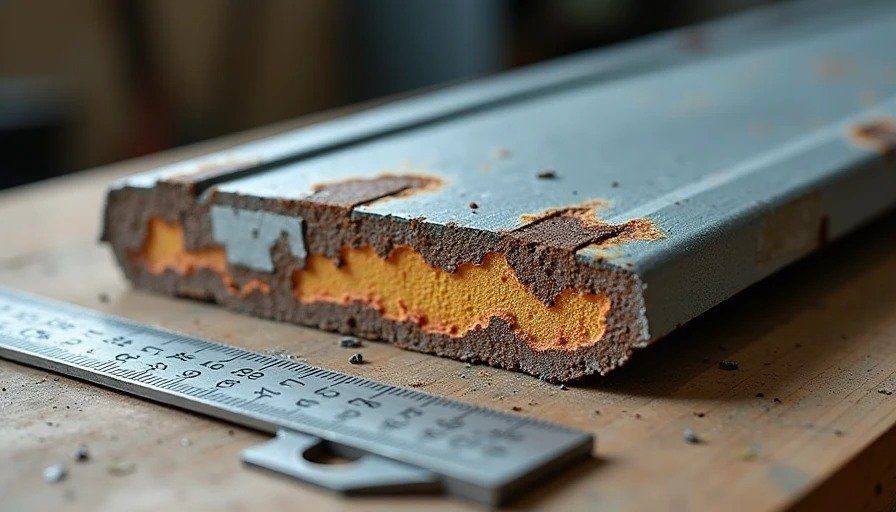
Under the coating, there was a layer of white corrosion (zinc from the galvanized steel) and orange-brown rust (from the steel itself).
The rust was spreading horizontally under the powder coat, lifting it from the steel.
The steel underneath was pitted where the rust had been eating into it.
The cut section on the workbench:
I cut a 2-inch section from the trailing edge of the rack, exposing the cross-section. The powder coat on the surface was about 0.020 inches thick — or it was supposed to be. In reality, the powder coat was thinner on the leading edge and trailing edge, where the wind had eroded it. It was down to 0.010 inches in some spots.
The steel under the powder coat:
The steel under the powder coat was clean, with no rust or corrosion. But where the powder coat had cracked, the steel underneath was rusted. The rust was visible as small orange spots, and the steel was pitted to about 0.005 inches deep.
The white corrosion:
Between the powder coat and the steel was a layer of white corrosion — zinc from the galvanized steel, mixed with the rust from the steel. This was the result of the salt reacting with the zinc coating on the steel. It was the first stage of corrosion, before the rusting of the steel started.
Why This Rack Rusted Faster Than Other Racks
I asked myself: why did this rack rust in 14 months when other racks last for years?
Here's what I figured out:
1. It was exposed to salt.
I drove the rack on the Mojave Road, on the Utah Traverse, and on roads in the southern Arizona desert that had been treated with salt in the winter. The dust and mud that accumulated on the rack were salty. The salt held moisture against the steel.
2. The powder coat was thin at the edges.
On the trailing edge of the rack, where the wind hits it, the powder coat had been eroded by the dust and grit picked up on the trail. The leading edge was similarly eroded. The rest of the rack was fine.
3. The welds were not protected.
The powder coat is applied before the rack is welded, so the welds are unprotected. The powder coat covers the outside of the weld, but it's thin at the edges. Vibration causes the powder coat to crack at the weld edges, exposing the steel.
4. The mounting points wore through.
The mounting points — where the rack met the factory roof rails — had worn through the powder coat. The constant vibration and movement rubbed the coating off, exposing the steel underneath.
5. UV degraded the powder coat.
The Arizona sun broke down the powder coat, making it brittle and more prone to cracking.
What I Did About It
I stripped the rack down and re-coated it.
1. I removed the powder coat.
I sandblasted the entire rack to bare metal. The powder coat came off easily in most spots, but in some spots where the rust had taken hold, it had bonded with the steel and was harder to remove.
2. I treated the rust.
I used a rust converter on the pitted areas, turning the rust into a protective coating. I then sanded the pitted areas smooth.
3. I primed and painted.
I painted the rack with two coats of zinc-rich primer and two coats of automotive-grade polyurethane paint. This is a more flexible coating, and I can touch it up when it chips.
4. I added protection.
I added rubber strips between the rack and the roof rails to prevent wear, and I used rubberized washers on all the fasteners to prevent chipping. I also plan to keep the rack waxed.
What I'd do differently:
I'd paint it, not powder coat it. Paint is easier to repair, more flexible, and easier to touch up. Powder coat is better for some applications, but for a roof rack that's exposed to sun, salt, and vibration, paint is the better choice.
The Tag on the Wall
I hung the cut section on the Parts Graveyard wall with this tag:
DATE: May 2025
LOCATION: Flagstaff, AZ — removed from the truck in the shop, but the damage was done on trails across the Southwest
PART: Full-length roof rack, steel tubing, powder-coated finish from a well-known brand
MILES ON PART: 8,000 trail miles, 14 months of use
FAILURE MODE: Powder coat erosion from UV, salt intrusion, and vibration damage
CAUSE: Combination of Arizona sun, salt from desert mud, and 8,000 miles of trail vibration
LESSON: Powder coat is good, but it's not bulletproof. It's brittle, doesn't self-heal, and fails at edges and stress points. If you run in salty, sunny, or high-vibration environments, consider painting instead, or at least be prepared for the powder coat to fail earlier than expected.
What You Should Look For
Before you buy a roof rack, look for these things.
1. The material.
Aluminum: Lighter, doesn't rust, but is more expensive and can corrode with salt. It's a good choice for desert use but may not be as strong as steel for heavy loads.
Steel: Stronger, cheaper, but rusts. If it's steel, it needs a good finish — powder coat, paint, or galvanizing.
Stainless steel: Doesn't rust, but is heavier and more expensive. A good choice if you're in a wet or salty climate.
2. The finish.
Powder coat: Good if it's quality and properly applied. But it's not bulletproof. It's brittle and doesn't self-heal.
Paint: More flexible and easier to repair. A good choice for the trail.
Galvanizing: A zinc coating that's applied to the steel. It's more sacrificial than powder coat and will rust before the steel does. It's a good choice for wet or salty environments.
3. The welds.
Look at the welds. Are they smooth or rough? A rough weld is more likely to have weak spots in the coating. Are the welds protected? A good rack will have the welds protected with a coating that's at least as thick as the rest of the rack.
4. The mounting points.
Are the mounting points designed to prevent wear? A good rack will have rubberized washers, rubber pads, or other protection at the contact points with the roof.
5. The warranty.
A good brand will have a warranty that covers the finish. If the brand doesn't offer a warranty on the finish, they may not be confident in it.
The Takeaway
A roof rack is a significant investment. It's the foundation for your roof-top tent, awning, and gear. If it rusts out in 14 months, you're not just out $800 — you're out the whole trip.
I learned the hard way that powder coat isn't a magic shield. It's a good start, but it's not enough for the conditions I put it through. Next time, I'll paint the rack, not powder coat it.
What I'd do differently:
I'd paint the rack with automotive-grade paint and primer.
I'd add rubberized protection at all contact points.
I'd inspect the rack regularly, looking for chips and cracks.
I'd touch up any chips immediately, before they start to rust.