The Ford Bronco Sasquatch package vs aftermarket lift decision looks simple in a dealership brochure. One route gives you a factory-engineered off-road package. The other lets you choose your own springs, shocks, tires, and clearance. After twelve years in an off-road shop and more trail repairs than I care to count, I can tell you the real question is not which one looks tougher. It is which combination gives you the capability you need without creating a pile of weak links.
For a Bronco that will see forest roads, desert washboard, snow, and occasional rock gardens, the factory package is a strong starting point. For a rig built around a specific tire size, suspension travel target, or long-term expedition plan, a carefully selected aftermarket system can make more sense. The wrong lift, however, can turn a reliable Bronco into an expensive steering-and-driveline experiment.
What the Sasquatch package brings from the factory
The Sasquatch package generally combines 35-inch Goodyear mud-terrain tires, beadlock-capable wheels, high-clearance fender flares, Bilstein position-sensitive dampers, increased ground clearance, and a lower final-drive ratio. It also includes front and rear locking differentials on applicable Bronco configurations. Those parts were selected as a system, not pulled from a discount bin and bolted on Saturday afternoon.
That system matters. Tire diameter, axle gearing, shock travel, steering angles, brake performance, and electronic controls all have to cooperate. The Sasquatch setup does that while retaining factory calibration and normal drivability. You can commute across town, air down at the trailhead, and use the lockers without adding a separate wiring harness or control module.
The factory package is also easier to explain when you sell the Bronco. A buyer knows what a Sasquatch-equipped vehicle is. With an aftermarket build, you need receipts, alignment records, torque specifications, and a clear answer about who installed every component. A pile of shiny parts is not the same as a tested suspension.

Ford Bronco Sasquatch package vs aftermarket lift: cost and capability
The Sasquatch package usually costs less than recreating every feature after purchase. A quality aftermarket lift alone can run roughly $1,500 to $4,000 for parts, while installation, alignment, tire mounting, and related hardware can push the project well beyond $5,000. Add 35-inch tires, wheels, gearing changes, bump-stop work, and upgraded steering components, and the invoice can climb quickly.
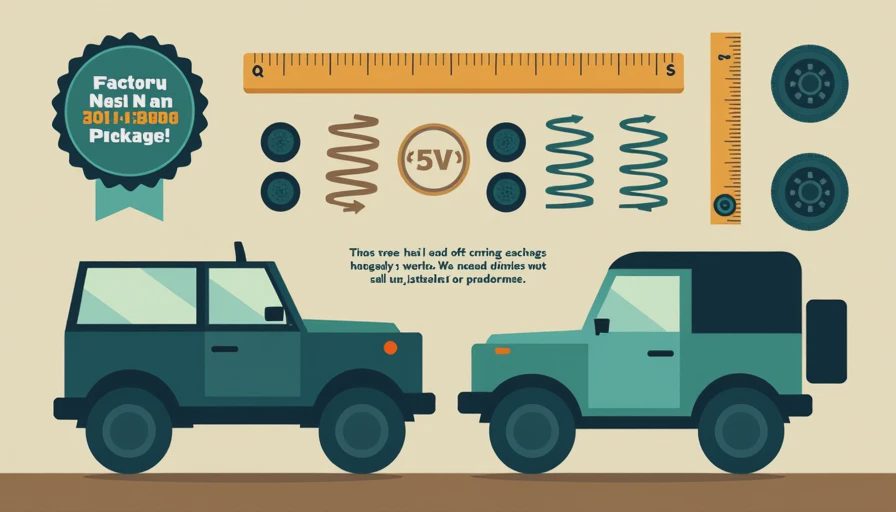
That does not mean the factory package always wins. An aftermarket lift gives you control. You can choose a two-inch system for daily use, a three-inch system for additional clearance, or a complete setup with adjustable control arms and properly matched shocks. You can also select an all-terrain tire instead of a mud-terrain tire if your Bronco spends 80 percent of its life on pavement.
The Ford Bronco Sasquatch package vs aftermarket lift debate becomes clearer when you match the build to the trail. On rocky routes near Moab or in Arizona's high desert, clearance and tire sidewall help. On long washboard sections, shock control and tire pressure matter more than a dramatic lift. A taller suspension does not automatically produce better traction, and a larger tire does not fix poor line choice.
I have watched owners spend thousands lifting a Bronco, then discover the factory steering tie rod is the first part to complain. The tires clear the fenders, but the steering geometry is unhappy. The front driveshaft runs at a steeper angle. The alignment changes under compression. That is how a parking-lot build becomes a recovery story.
When an aftermarket lift is the smarter tool
An aftermarket system makes sense when you have a defined requirement. Maybe you need clearance for 37-inch tires, carry a steel bumper and winch, or run a constant rear load from a drawer system, water tank, and rooftop tent. A properly rated suspension can manage that weight better than a factory configuration designed for a different load.
Look for a complete kit rather than a collection of unrelated parts. Springs and shocks should be matched to the Bronco's engine, doors, armor, and cargo. If the kit changes suspension height substantially, budget for alignment correction, bump-stop adjustment, brake-line inspection, and driveshaft-angle checks. Adjustable track bars and control arms may be necessary depending on the lift height and suspension design.
Do not shop by advertised height alone. Ask for shock part numbers, spring rates, warranty terms, and installation instructions. A reputable manufacturer should explain what happens to caster, camber, toe, and anti-squat behavior. If the answer is only “it looks great with 37s,” keep walking. That is marketing, not engineering.
The best aftermarket build I have worked on was not the tallest one. It used moderate lift, sensible tires, upgraded recovery points, and careful alignment. It drove straight at highway speed and kept its suspension planted on rough two-track. That combination beats a six-inch-looking stance every time.
Warranty, insurance, and maintenance costs
Factory equipment normally gives you the cleanest warranty path because the vehicle was assembled and tested as a complete configuration. An aftermarket modification does not automatically void the entire vehicle warranty, but a manufacturer or dealer can challenge coverage for a failure connected to the modification. A broken differential, damaged CV joint, or premature ball-joint wear gets more complicated when tire size and suspension height have changed.
Insurance deserves the same attention. Tell your insurer about expensive wheels, tires, suspension, bumpers, and recovery equipment. A standard policy may not automatically cover the full replacement value of custom parts, especially if they were added after purchase. Ask about custom equipment coverage and keep invoices and photographs. A $3,500 suspension upgrade should not disappear from your claim paperwork because nobody wrote it down.
Maintenance is also part of the purchase price. A lifted Bronco needs regular inspection of tie-rod ends, ball joints, control-arm bushings, wheel bearings, driveshaft joints, and fasteners. After the first few hundred miles, recheck torque and alignment. After a hard trip, inspect the underside before washing off the evidence. Mud hides loose hardware very well.
My trail-side recommendation
For most owners buying a new Bronco and wanting dependable trail capability immediately, I would choose the Sasquatch package. It gives you a coordinated baseline, factory integration, and fewer variables to diagnose when something acts strange in the middle of nowhere. It is especially sensible if you use the Bronco as a daily driver and only take several major trips each year.
I would choose an aftermarket lift when the build has a specific job that the factory package cannot handle. That could mean sustained payload, a different tire strategy, expedition armor, or a carefully planned 37-inch setup. Build it in stages. Start with tires and recovery equipment, then evaluate clearance and handling before changing suspension height. Measure twice, cut nothing until you know why you are doing it.
The Ford Bronco Sasquatch package vs aftermarket lift choice should end with a vehicle you can inspect, repair, and trust. If the package meets your trails, leave it alone and spend the money on skid plates, a compressor, recovery points, and training. If you need more, use quality parts and document every change. If it hasn't broken in the backcountry, I don't recommend it.