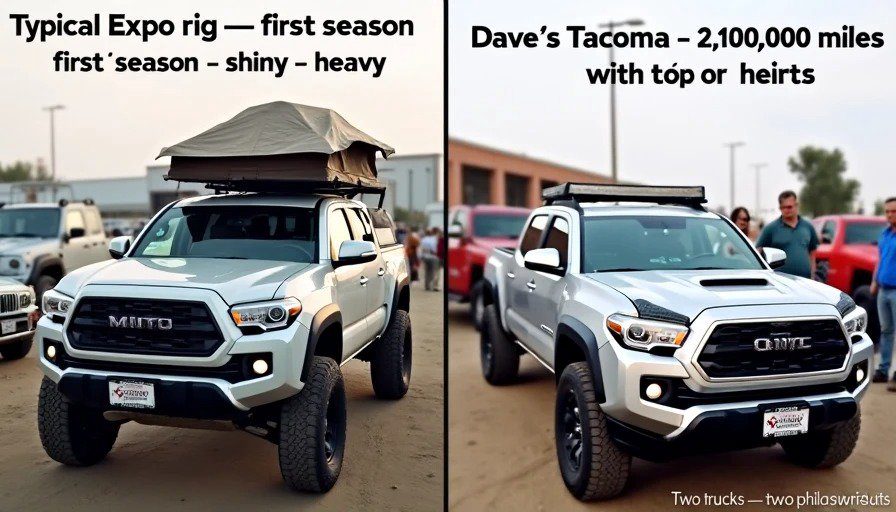
I met Dave at Overland Expo last year. I was standing in the shade of my 4Runner's awning, watching the parade of $80,000 rigs roll by — full-length roof racks, rooftop tents, dual batteries, swing-out bumpers, and more lights than a stadium. Everything shiny, everything new, everything clearly in its first season of use.
And then Dave rolled in.
His truck was a 2014 Toyota Tacoma, access cab, four-wheel drive, in a shade of silver that had been faded by 200,000 miles of sun. The paint was scratched. The windshield was cracked. The bed had dents that looked like they came from loading firewood, not from a designer's rendering of what a "bed rack" should look like.
He parked, got out, and started setting up camp. No awning. No rooftop tent. No slide-out kitchen. Just a hard-sided ground tent — a simple, old-school, two-person dome tent. A folding chair. A small camp stove. A cooler.
I walked over and introduced myself.
"Nice truck," I said.
"Thanks," he said. "It gets me where I need to go."
He's a backcountry ranger for the Bureau of Land Management. He's driven this Tacoma from Alaska to Patagonia, through the Mojave, across the Great Basin, and down the entire length of the Rockies. He's spent more nights in a tent than most overlanders spend in a lifetime. And his truck — this simple, scratched, dented, faded Tacoma — has never needed a tow.
The Vehicle: 2014 Tacoma Access Cab, 4x4
Miles: 201,000
Engine: 4.0L V6 (1GR-FE) — stock, no mods
Transmission: 6-speed manual
Transfer case: Stock, with 4-Lo
Axles: Front IFS, rear Toyota 8-inch
Gearing: 4.88:1 (re-geared from 3.73 when he went to 33s)
Suspension: 2-inch lift (more on that later)
Tires: 33x10.5R15 (yes, 15-inch wheels — narrower than most people run)
Dave's philosophy is simple, and he'll say it before you even ask:
"The best gear is the gear you don't need. Every extra pound, every extra part, every extra system is something that can fail. I've been 200 miles from pavement in this truck, and I've never wished I had a fridge or a satellite dish on my roof."
The Suspension: 2 Inches and Done
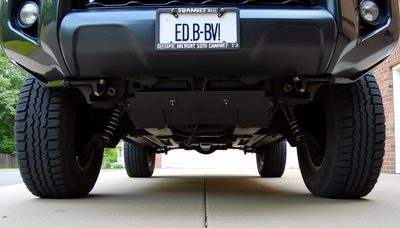
Dave's lift is a 2-inch setup — Old Man Emu springs and shocks all around. He installed it 80,000 miles ago and hasn't touched it since.
"Two inches is all you need to clear 33s on a Tacoma," Dave told me. "You don't need 4 inches of lift. You don't need long-travel suspension. You need enough clearance to get over rocks and enough articulation to keep the tires on the ground. A 2-inch lift on a Tacoma with 33s will go anywhere a 4-inch lift on 35s will go, but it won't break anything on the way."
His articulation is limited by the IFS, but he says it's adequate for the terrain he runs.
"The IFS isn't a solid axle," he said. "I know that. But it's more comfortable, it handles better on pavement, and it hasn't broken in 200,000 miles. Good enough for me."
What Dave skipped: Long-travel suspension, adjustable control arms, extended brake lines, and any of the geometry correction that most lift kits require. At 2 inches, he says, you don't need them.
What he didn't skip: Proper bump stops. Dave installed extended bump stops to prevent the suspension from bottoming out hard on big hits. "That's the one thing people forget," he said. "Bump stops keep your shocks alive. I've replaced mine once. I'm fine with that."
The Tires: 33s on 15-Inch Wheels
Dave runs 33x10.5R15 tires on factory steel wheels. Yes, 15-inch wheels — which is increasingly rare on Tacomas, but Dave likes them because they give him more sidewall.
"I've had two flats in 200,000 miles," he said. "Both were repairable with a plug kit. The tall sidewall on 15s gives me more flex, more traction, and it's harder to damage the rim. I don't need 17-inch wheels and low-profile tires. I need sidewall. And 15s have a lot of sidewall."
The tires are BFGoodrich KO2s — the same as what I run on my 4Runner. Dave's on his second set. He got 95,000 miles out of the first set, which is impressive for 33s.
Dave's thoughts: "The tire is the most important part of the build. Buy the best you can afford, keep them at the right pressure, and they'll last forever. I run 18 PSI on the trail and 35 PSI on pavement. That's been the right formula for a decade."
The Drivetrain: Re-Geared and Locked
Dave re-geared his axles to 4.88:1 when he went to 33s. The factory 3.73 gearing wouldn't turn the 33s without straining the engine and transmission.
"Re-gearing is non-negotiable if you're going to 33s," he said. "If you don't, you're running the engine at the wrong RPM, you're overheating the transmission, and you're putting stress on everything. It costs $1,200 to do it right, and it pays for itself in engine life. I'm at 200,000 miles with no engine problems. The re-gear is part of that."
The rear locker: Dave installed a factory Toyota E-locker in the rear axle. It's the same locker that came in later TRD Off-Road models. It's selectable, controlled by a simple switch on the dash.
"I've used it maybe a dozen times in 200,000 miles," he admitted. "But every one of those times, it was the difference between moving forward and getting stuck. It's one of those things you don't need often, but when you need it, you really need it."
The front: Open diff. Dave says he's never needed a front locker.
"The rear locker gets me through 95% of the stuff I'm willing to drive. If I need a front locker, I'm probably on a trail I should have turned around on. The Tacoma's IFS is the limiting factor, and I'm okay with that."
The Armor: Minimal and Functional
Dave's armor is the most basic I've seen on a truck with 200,000 miles:
Front bumper: Factory. No winch mount, no bull bar, no stinger. Just the stock bumper.
Skid plates: The factory transfer case skid is still there. The engine oil pan is protected by a home-made 1/4-inch plate that Dave cut and bolted on.
Rock sliders: None. Dave says he doesn't do the kind of rock crawling that requires sliders.
Rear bumper: Factory. Dave added a Class III hitch receiver for recovery points.
"I've caught the oil pan twice," he said. "Both times, the skid plate I made saved it. I've never caught a rocker panel, so I don't need sliders. Don't armor what you don't hit."
The Recovery Gear: Just the Basics
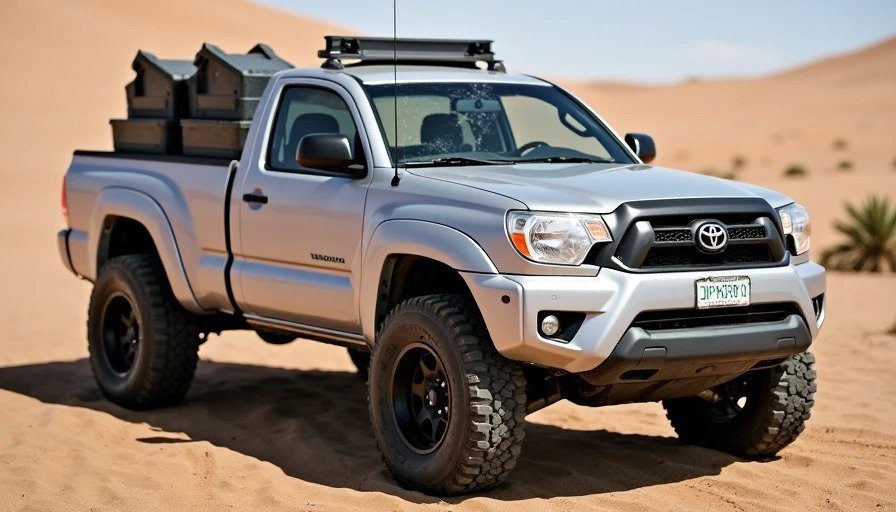
Dave's recovery setup is simple:
Snatch strap: 20-foot ARB strap
Shackles: Two 3/4-inch recovery shackles
Tree strap: 10-foot strap
Shovel: A regular old garden shovel from the hardware store
High-lift jack: A 48-inch high-lift jack that he says he's used twice — and one of those times was to change a tire when the bottle jack failed
"I don't have a winch," Dave said. "I've thought about it, but I've never needed one. A winch is a great tool, but it's also heavy, expensive, and one more thing to maintain. If I ever start doing solo trips in terrain where I need a winch, I'll add one. But so far, the snatch strap and shovel have been enough."
Dave's checklist:
Snatch strap (20-foot)
Shackles (two 3/4-inch)
Shovel (garden variety, not folding)
High-lift jack
Tire plug kit
Air compressor (a basic portable unit, not a $400 twin-motor setup)
The Storage: No Drawers, No Fridge, No Bed Rack
Dave's Tacoma has a standard access cab with the rear jump seats removed. In their place: plastic bins.
"My entire camp setup fits in three bins," Dave said. "One for the tent and sleeping bag, one for cooking gear, and one for food and miscellany. The cooler goes on the floor. The stove goes in the bin. The spare tire goes in the bed. That's it."
What Dave doesn't have:
No rooftop tent (he sleeps in a ground tent)
No awning (he uses a tarp if it's going to rain)
No refrigerator (he uses a cooler)
No bed rack (the camp gear sits flat in the bed)
No drawer system (plastic bins are lighter and easier to configure)
No dual battery system (he doesn't need one — no fridge, no winch, no big electrical loads)
No solar panels
No water tank (he uses 5-gallon jugs)
No pull-out kitchen
No shower system
Dave's thoughts: "Every one of those things is weight. Weight is the enemy. The heavier your truck is, the harder it is on the suspension, the tires, the drivetrain, and your fuel economy. I've seen rigs that weigh 7,000 pounds fully loaded. My truck weighs 4,400 pounds fully loaded. I use less fuel, I wear out parts slower, and I get stuck less often."
The Electrical: Minimal
Dave's electrical system is as simple as it gets:
Single battery (Optima Yellow Top, 5 years old)
No dual-battery system
A small 200W inverter for charging his phone and laptop
A small LED light strip in the bed for nighttime setup
"I don't have a fridge, so I don't need a big electrical system," he said. "I charge my phone from the truck. My laptop is from 2015. The inverter is enough."
Dave's thoughts on the "dual-battery must-have" myth: "I know everyone says you need a dual-battery system for overlanding. But if you're running a basic camp setup — no fridge, no winch, no big lights — you don't need a second battery. You can run a small cooler on 12V for two days without killing the starter battery. And if you're worried, carry a jump pack."
The Reliability Philosophy: Leave It Stock Where It Counts
Dave's approach to reliability is simple: don't modify what doesn't need modifying.
Here's what he hasn't modified:
Engine: Stock, no mods, just regular oil changes
Transmission: Stock, no mods, just regular fluid changes
Transfer case: Stock, just regular fluid changes
Driveshafts: Stock (the 2-inch lift doesn't require a new driveshaft)
Electrical system: Stock
Here's what he has replaced when they failed:
Alternator: Once (180,000 miles)
Water pump: Once (160,000 miles)
Starter: Once (150,000 miles)
Clutch: Once (120,000 miles)
Dave's thoughts: "The Toyota 4.0 is one of the most reliable engines ever made. The manual transmission is bulletproof. The gearing is right. There's no reason to mess with any of it. I change the oil, change the filters, and drive it. That's the whole secret."
What Dave Spends His Money On
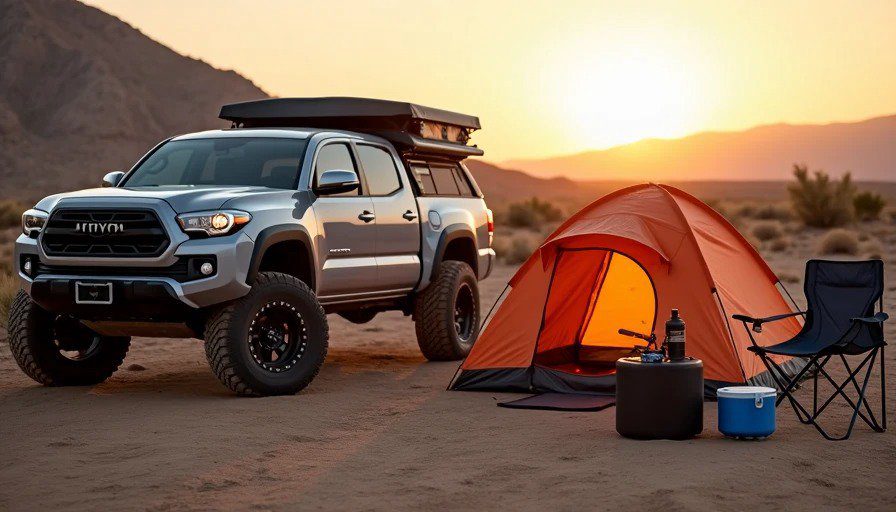
Dave isn't a minimalist by accident. He's a minimalist by intention. He spends money on what matters:
Tires: High-quality tires. BFGoodrich KO2s. He gets 90,000+ miles per set because he keeps them at the right pressure.
Gearing: He re-geared the diffs for the larger tires. The engine runs at the right RPM and doesn't strain.
Maintenance: He replaces parts before they fail — water pump at 120,000, alternator at 150,000, clutch at 120,000.
Tools: He carries a full set of sockets, wrenches, and electrical tools. He knows how to use them.
Tent: A high-quality ground tent that's been through hundreds of nights and still doesn't leak.
What he doesn't spend money on:
Fridge and slide
Rooftop tent and bed rack
Awning
Dual batteries
Winch
Drawer system
Solar panels
Water tanks
Shower system
Satellite dish
Aftermarket bumpers
Dave's thoughts: "People spend $10,000 on a fridge and a rooftop tent, and then they're too heavy to drive on the trail. I spend $500 on a tent and a cooler, and I'm lighter, faster, and more capable. It's not about money. It's about weight and complexity."
What Dave's Tacoma Taught Me
I spent a lot of time talking to Dave at Overland Expo, and I learned more from that conversation than from the rest of the show combined.
Here's what I took away:
1. Weight is the enemy. Every extra pound on the truck is a pound that stresses the suspension, reduces fuel economy, and makes the truck more likely to get stuck. Dave's Tacoma weighs 4,400 pounds fully loaded. Most overland rigs I see weigh 6,000-7,000 pounds. That's a huge difference.
2. Complexity is the enemy. Every extra system — dual battery, fridge, solar, winch, drawer system — is a system that can fail. Dave's truck has fewer systems, so he has fewer failures.
3. The best gear is the gear you don't need. Dave carries only what he actually uses. He's not carrying a backup for a backup. He's not carrying gear because it looks good on Instagram.
4. Maintenance is more important than mods. Dave has 200,000 miles on the truck because he maintains it. He changes the oil, the fluids, and the filters. He replaces parts when they need replacing. He doesn't skip maintenance because he's "too busy."
5. Know your limits. Dave knows his truck's limits. He doesn't try to drive trails that require a solid axle or 37s. He turns around when the trail gets too narrow or too rocky. He doesn't have to prove anything.
6. Practice is better than parts. Dave knows his truck because he's driven it 200,000 miles. He knows how to fix it because he's fixed it. He's not relying on a mechanic or a satellite phone to bail him out.
The Parts Graveyard Connection: Dave's Dashboard
Dave has a small collection of parts on his dashboard — not from failures, but from successes.
There's a broken U-joint from a trip through the Mojave, a cracked vacuum line from Colorado, and a melted wire from a near-short in the engine bay.
"These are all the things that almost went wrong," Dave said. "The U-joint got loose, I tightened it. The vacuum line cracked, I replaced it. The wire melted, I fixed it. These are reminders that the truck needs attention, and that you need to know what to look for."
The cracked vacuum line is a real Part Graveyard entry for Dave. He was in Colorado, at 10,000 feet, and the vacuum line cracked. He patched it with electrical tape and a section of bicycle inner tube. It got him out.
"I patched it, replaced it when I got home, and kept the cracked line as a reminder," Dave said.
The Takeaway
Dave's Tacoma is a testament to a simpler way of doing things. It's not a show truck. It's a working truck — a truck that's been to remote places, crossed mountains, driven through deserts, and come back without a tow.
He's spent less than $5,000 on modifications over 200,000 miles. He's been to Alaska and Patagonia. He's never been recovered by anyone else.
He's proved that a simpler build is faster, more reliable, and more capable than a complex build.
If you're building an overland rig and you're wondering where to spend your money, ask yourself: what did Dave spend his money on? Tires. Gearing. Maintenance. Tools.
What did Dave skip? Almost everything else.
And he's driven his rig further than most of us ever will.
P.S. Dave's Build at a Glance
Mod | What Dave Runs | Why |
|---|---|---|
Lift | 2-inch OME springs and shocks | Enough to clear 33s without geometry issues |
Tires | 33x10.5R15 KO2s on stock 15-inch steel wheels | Tall sidewall, narrow footprint, proven |
Gears | 4.88:1 | Re-geared for 33s — the right way |
Locker | Rear factory E-locker | Rarely used, but essential when needed |
Armor | Minimal (home-made oil pan skid) | Only armor what you actually hit |
Recovery | Basic (strap, shackles, shovel, high-lift) | Simple, reliable, field-serviceable |
Electrical | Single battery, jump pack, small inverter | No fridge, no winch, no need for dual |
Storage | Plastic bins in the bed | Lightweight, configurable, inexpensive |
Sleeping | Ground tent | Lighter, less complex, proven |
Weight | 4,400 lbs fully loaded | Lighter = faster, less wear, more capable |
Total mod cost | Under $5,000 | Over 200,000 miles, with no major failures |
No comments yet — grab the first one.