I've spent the last six years guiding overland trips out of Flagstaff, Arizona, and I've watched tires die on washboard roads that shake the fillings out of your teeth. So when I decided to test Pirelli A/T tires on my own rig, I wasn't looking for a parking-lot review. I wanted to know how they handle high-speed gravel, sharp basalt edges, and the kind of thick mud that appears out of nowhere after a monsoon. A full season of trail miles, campsites, and one very memorable recovery later, I've got answers you won't find in a spec sheet.
Why I Tested Pirelli A/T Tires
Before I mount any tire on a rig I plan to trust a hundred miles from pavement, I do two things. I talk to people who have actually broken things in the field, and then I run the tire myself. A few overlanding friends put Pirelli A/T tires through Baja and the Mojave with nothing worse than a plugged nail, which got my attention. Pirelli isn't the first name that usually comes up around a campfire when someone is talking about overland tires, but that lack of hype made me curious. If the tire was mediocre, someone would have told me by now.
What Pirelli A/T Tires Do Right on the Trail
The first thing I noticed was the noise, or the lack of it. On the highway between Flagstaff and Sedona, these tires hum less than the worn-out mud tires I had been running, and the steering response is crisp for a heavy A/T. On Schnebly Hill Road, a graded shelf road with broken sandstone and loose gravel, the tread hooks up predictably at partial throttle.

The shoulder lugs are spaced close enough to keep stones from getting lodged, and I didn't have to stop and pick rocks out every few miles like I'd done with other brands. In the sharper stuff, the sidewall took a few hits that would have raised a bubble in a softer casing. On the Mogollon Rim, where the basalt can get knife-edged after a good freeze, I didn't lose any cap plies.
Where Pirelli A/T Tires Come Up Short
Let's not pretend these are mud tires. In the heavy clay mud that collects in the low spots around Mormon Lake, the tread packed up fast. I was aired down to 16 psi and still had to use momentum and a snatch strap to get through a section that a set of proper mud tires would have walked. If your trail diet is anything wetter than the high desert, you'll want to plan around that. They also don't have the same sidewall bite as a dedicated rock tire. On a tricky ledge climb near Crown King, I had to pick a cleaner line because the shoulder lugs don't want to grab and hold on vertical granite. That's not a failure, but it's a limit worth knowing before you buy.
Air Pressure and Load: How I Run These Tires
Tire pressure is where these Pirelli A/T tires either shine or fall apart, and that's true of any A/T. On pavement, I run 32 psi front and rear on my 4Runner. On washboard, I drop to 18 psi and the chassis stops rattling. On sharp rock, I go down to 14 psi, and the sidewall flexes just enough to wrap around edges instead of cutting into them.
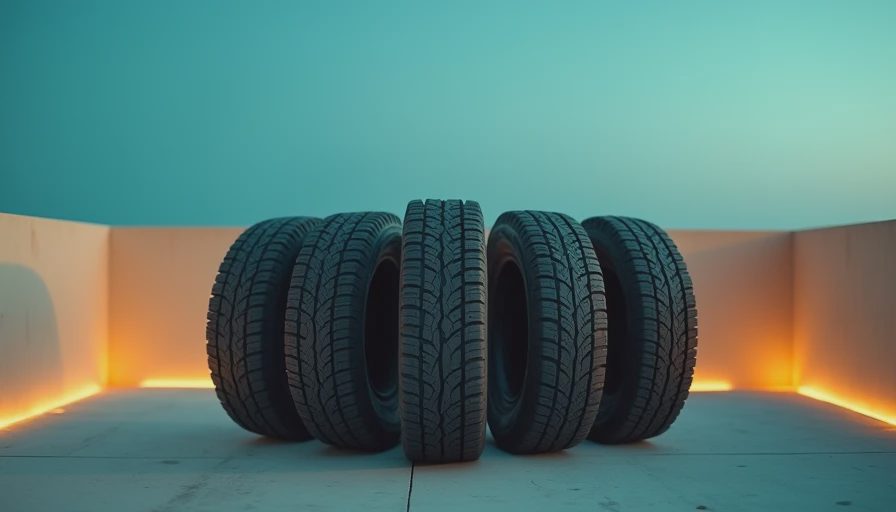
The load rating matters too. I'm running load range E in a 285/70R17, and even with a rooftop tent, a drawer full of recovery gear, and a fridge, the sidewalls stay cool to the touch after a long day. If you're running a lighter rig, a C-rated tire would likely ride smoother, but I'll take the extra margin every time.
Cost, Value, and the Bottom Line
In a 285/70R17, you'll typically pay $220 to $300 per tire for Pirelli A/T tires, depending on the exact build and load rating. That puts them in the same conversation as BFGoodrich All-Terrain T/A KO2 and the Falken Wildpeak A/T3W. After about 12,000 miles, the wear is even across all four corners, with no signs of cupping or feathering. Rotating them every 5,000 miles with the spare in the rotation keeps it that way. I also appreciate that the DOT date codes were fresh, which isn't always the case with tires that have been sitting in a warehouse. For a tire you're going to drive to work and then run a trail on the weekend, that price-to-durability ratio is fair.
Final Verdict After a Full Season
After a season of washboard, basalt, clay, and one particularly ugly recovery that involved a winch, a high-lift, and a creek crossing, I'm comfortable recommending Pirelli A/T tires for anyone who spends weekends on graded dirt and the occasional rock garden. They're not the ultimate mud tire, and they won't turn your rig into a dedicated crawler. What they will do is get you there and back without drama, with predictable traction and steady wear. If it hasn't broken in the backcountry, I don't recommend it. These didn't break. That's the highest praise I can give any tire.