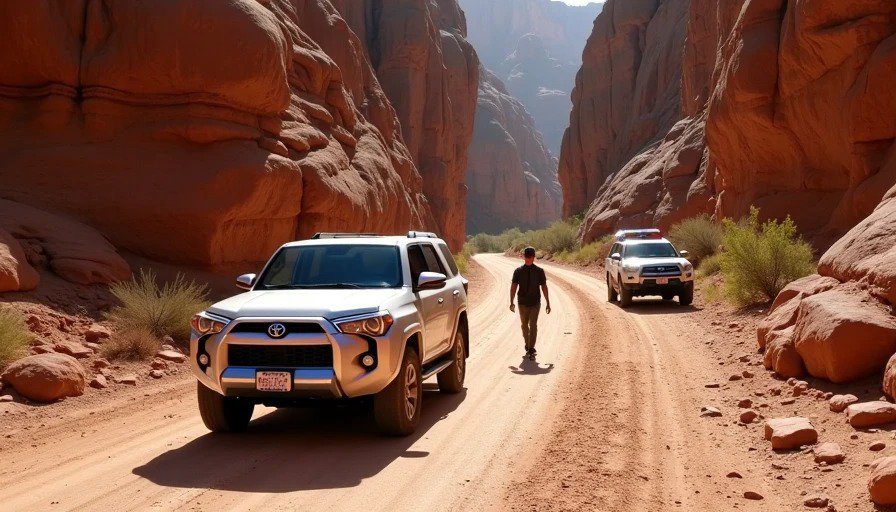
I've been on a lot of trails. Some with friends, some with strangers, some with groups where I was the only one who'd been on that particular route before. And every time, without fail, there's at least one person who does something that makes everyone else cringe.
Sometimes it's a safety issue. Sometimes it's just bad form. Sometimes it's a lack of awareness — the person genuinely doesn't know they're doing something wrong. And sometimes it's just someone who doesn't care.
I'm not here to lecture. I'm here to point out the seven things I see most often. Some of these I've done myself, and I learned the hard way. Some I've seen others do and resolved never to repeat. All of them will earn you a reputation on the trail — and not the good kind.
So before you head out on your next trip, check your habits. Don't be that guy.
1. Parking in the Middle of a Bottleneck
This is the most common one. And it's the one that makes people the most frustrated.
You're on a narrow trail. The road is barely wide enough for one vehicle. There's a turnout, a wide spot, or a passing lane every few miles. You stop to take a photo, have a snack, or just check the map.
Where do you park?
If you park in the middle of the road, blocking the trail, you're that guy.
The problem: Someone else is coming the other way. Or someone behind you wants to pass. Or there's a vehicle coming up from behind and there's no room to pull over. You've just created a bottleneck, and now everyone has to wait for you to move.
The solution: Pull off the trail. Park in a turnout, a wide spot, or a spot where you're not blocking the road. If there's no turnout, move to the edge of the trail so other vehicles can pass. Don't stop in the middle of the road.
What makes it worse: Parking in the middle of a bottleneck, then getting out and walking 50 feet away from the vehicle. Now no one can even ask you to move, because you're not there.
What makes it better: If you have to stop, pull over. If there's no room, move to the edge. And if you're going to be stopped for more than a minute, move to a spot where others can pass.
The exception: If you're on a shelf road with no room to pull over, you can't move. But in that case, you need to be quick — get your photo, get your snack, and get moving. Don't sit there for 20 minutes.
2. Unsecured Gear
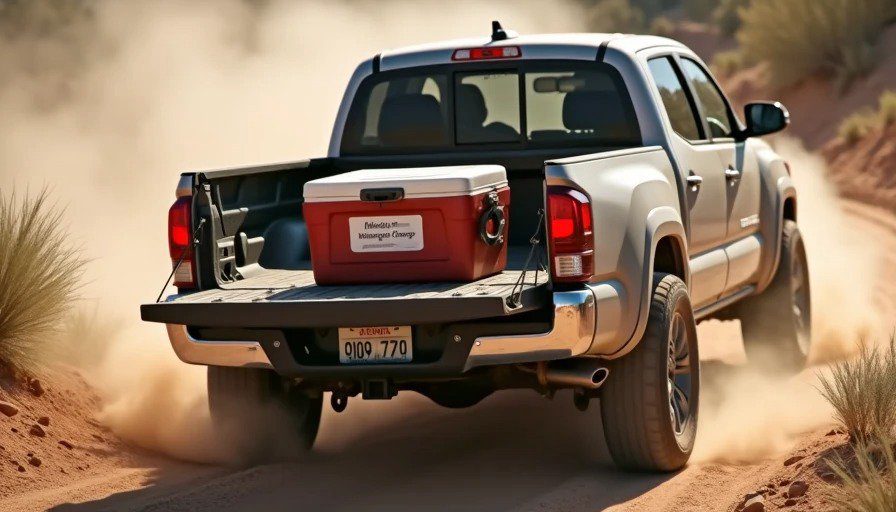
This is a safety issue, not just an etiquette issue.
Unsecured gear in the bed of a truck or on a roof rack is a projectile. Hit a bump, a pothole, or a washboard section, and that gear goes flying. If it's in the bed, it might fly out. If it's on the roof, it might come down.
The problem: A cooler that weighs 40 pounds becomes a 40-pound missile if you hit a big bump. A spare tire that's not strapped down can crush the rear window or the cab. A rooftop tent that's not properly mounted can tear off in a crosswind.
The solution: Strap everything down. Use ratchet straps, tie-downs, or bungee cords. Check your roof rack mounts before every trip. Make sure the gear is secure.
What makes it worse: Not tying down heavy items. Putting loose items in the bed without securing them. Using straps that are old and worn out.
What makes it better: Checking your straps before every trip. Replacing worn straps. Securing all gear, including light items that could fly around in the cab.
The Parts Graveyard connection: I've got a cooler on the wall that flew out of the back of a truck on a washboard road. It was a $200 cooler, ruined. The owner's first words were "I should have strapped that down."
3. Blocking the Trailhead While You Air Down
This is a variation of bottleneck parking, but it's specific enough that it deserves its own entry.
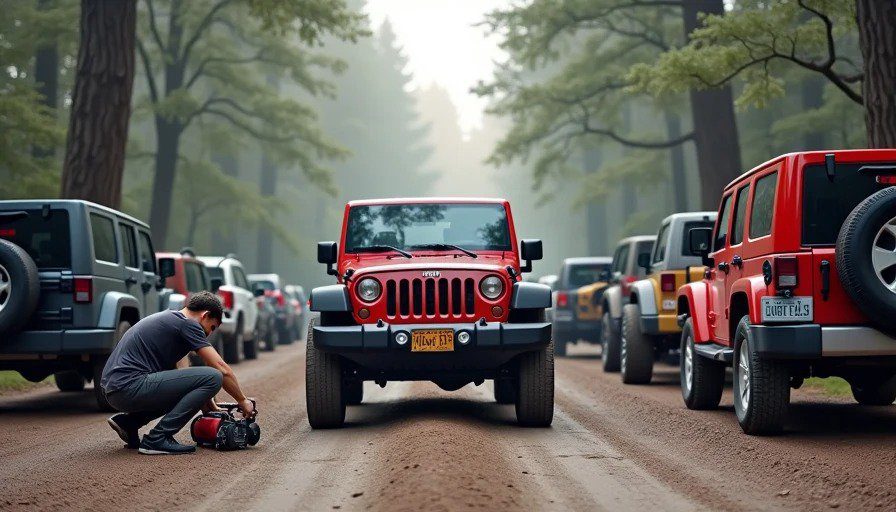
You get to the trailhead. There's a parking lot, a wide area, or a shoulder. You stop to air down, check your tire pressure, and get the truck ready for the trail.
Where do you park?
If you park in the middle of the trailhead access, blocking the entrance, you're that guy.
The problem: Other vehicles are coming in behind you. They want to park, air down, or just get on the trail. You're blocking the entire entrance, and now they have to wait for you to move.
The solution: Park in the designated parking area. If there isn't one, move to the side of the trailhead access where you're not blocking anyone. Air down quickly and efficiently — don't spend 20 minutes adjusting your tire pressure while others are waiting.
What makes it worse: Parking in the middle and taking your time. Talking to friends, getting out your gear, and generally not caring that others are waiting.
What makes it better: If you know you're going to be slow, park out of the way. If you're blocking the entrance, move. If you're going to take a while, let others go ahead.
4. Not Helping When Someone Gets Stuck
This one is about attitude.
You're in a group. Someone gets stuck. You watch them dig, winch, and struggle. You don't offer to help. You stand there with your hands in your pockets, watching.
The problem: You're not helping. The stuck person might not ask for help because they don't want to be a burden. But they need it. And you're not offering.
The solution: Offer to help. Get out, see what's going on, and see if you can assist. Maybe you can't do much, but offering is half of it. "Need a hand?" goes a long way.
What makes it worse: Standing there watching, making comments, or being critical. Saying "you should have taken that line" or "I told you you'd get stuck" — that's not helpful.
What makes it better: Getting out, walking over, and offering to help. Even if you're not the one doing the recovery, you can be the one holding the light, spotting the driver, or just giving moral support.
The exception: If you're not comfortable helping, that's fine. But at least offer to get out of the way. Don't make it worse.
5. Leaving Trash on the Trail
This one should go without saying. But it still happens, more often than it should.
You're on the trail. You have a snack, a drink, or a wrapper. You toss it out the window or leave it on the ground.
The problem: Trash on the trail is disrespectful to the land, to other users, and to the people who maintain the trails. It's also illegal in many areas. And it makes everyone look bad.
The solution: Pack it in, pack it out. Carry a trash bag. Put your trash in the bag. Take it home and dispose of it properly.
What makes it worse: Leaving wrappers, containers, or cigarette butts in remote areas that are supposed to be pristine. Leaving food waste that attracts animals.
What makes it better: Bringing a trash bag and using it. If you see trash that someone else left, pick it up. Leave the trail better than you found it.
6. Bad Radio Manners
This one's for groups with CB, GMRS, or HAM radios.
You're in a group. You're using radios to communicate. But you're not using them properly — you're chattering on the channel, transmitting over others, or using the radio for non-essential communication when others need to hear important information.
The problem: Radios are for communication, not chit-chat. When someone is trying to communicate something important, and you're talking over them, it can cause confusion or even an accident.
The solution: Use the radio properly. Speak clearly, wait for others to finish, and don't chatter. If you're on a channel, stay on it and listen. If you need to pass information, pass it clearly.
What makes it worse: Chatter. Using the radio for non-essential communication. Talking over others. Not listening.
What makes it better: Keeping it brief. Passing information clearly. Listening before transmitting. Turning down the volume if you don't need to hear everything.
7. Not Paying Attention to the Driver Behind You
This one's about trail etiquette.
You're in a group. You're driving on a trail. The driver behind you is trying to get your attention — maybe to tell you something, to ask a question, or to let you know there's a problem.
You don't notice. You keep driving.
The problem: The driver behind you might have a problem — a flat tire, a mechanical issue, or a recovery situation. If you're not paying attention, they can't let you know. And if you keep driving, they're left behind.
The solution: Watch your mirrors. Check on the driver behind you occasionally. If they're stopped, stop and check. If they're waving at you, pull over and see what they need.
What makes it worse: Ignoring the driver behind you, assuming they'll catch up, or driving too fast.
What makes it better: Slowing down, checking your mirrors, and communicating. If you're the group leader, stop every so often to let the group catch up. If you're in the middle, check the driver in front and behind. If you're in the back, let the driver in front know if there's a problem.
The exception: If you're on a trail and there's no one behind you, this doesn't apply. But if you're in a group, it's your responsibility to be aware.
The Takeaway
I've seen all of these things on the trail. I've been guilty of a few of them myself, especially in my early years. I learned by watching others make the same mistakes, and sometimes by making them myself.
The trail is a place to enjoy, to explore, and to be part of a community. And the community works best when everyone is considerate, aware, and ready to help.
Don't be that guy.
Be the guy who:
Parks out of the way
Secures all gear
Aired down efficiently and out of the way
Helps when someone is stuck
Packs out what they pack in
Uses the radio politely
Pays attention to the people behind them
That's the guy everyone wants to run trails with.