When people ask about body lift vs suspension lift in my shop, I ask one question back: what are you trying to clear, the tire or the trail? A body lift can make room for bigger rubber without changing the frame-to-axle relationship, while a suspension lift changes how the truck sits and flexes. That difference matters when the road turns into ledges, ruts, and washboard. Pick the wrong one, and you can spend real money and still drag a skid plate in the same rock garden.
The short answer from the dirt
If your only goal is to fit a slightly larger tire and keep the truck close to stock, a body lift is the cheap, simple move. If you want more ground clearance under the axles, better approach angle, or more wheel travel, suspension is the real fix. That is the heart of body lift vs suspension lift. One changes where the sheet metal sits on the frame. The other changes how the chassis moves over broken terrain. On a dirt road, that difference is academic. On a ledge, it is the whole game.
A body lift usually means spacers between the body and frame, often one to three inches. It does not raise the differential, transfer case, or lower control arms. So yes, the truck can swallow a bigger tire, but the lowest hard parts stay in the same place. A suspension lift costs more, but it can improve clearance under the axles and give the suspension room to work if the parts are matched correctly.
What a body lift really changes
I like a body lift when the build goal is modest and the owner wants to keep steering feel, ride height, and driveline angles close to stock. On a pickup, SUV, or older Jeep, it can be a clean way to buy tire clearance without tearing half the front end apart. That said, cheap does not mean invisible. You may need to address bumper gaps, fan shroud fitment, fuel filler lines, shifter linkages, and wiring slack. On some rigs, the steering shaft needs attention too. Ignore those details and the kit turns into a weekend of cussing.
Cost is the lure here. A decent kit can run a few hundred dollars, and labor is usually lighter than a full suspension job. But I have seen people save $800 on the lift and then spend it right back on trimming, corrected bumper brackets, and a steering fix. That is why I tell folks to price the whole job, not just the box on the shelf.
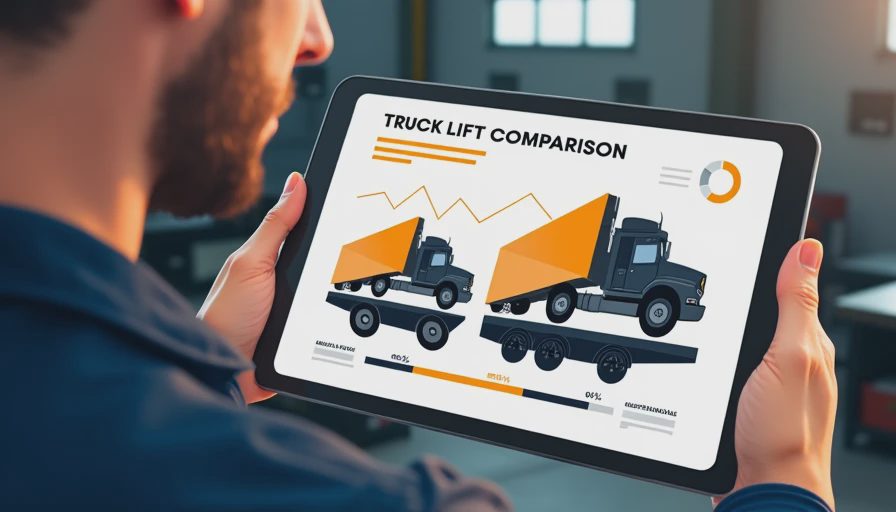
When a suspension lift earns its keep
A suspension lift is the right answer when the truck actually needs to work off-road. If you are crossing ruts, loading a rooftop tent, towing a trailer into a camp, or picking lines through loose rock, the extra clearance and travel matter. On solid-axle rigs, that can mean springs, shocks, track bar correction, brake line length, and sometimes driveshaft work. On IFS trucks, it can mean upper control arms, CV angle management, and alignment specs that still fall inside the factory window.
This is where a lot of people get burned by spacer lifts. A spacer can raise the body or preload the suspension, but it does not magically create more articulation. Sometimes it just tops out the shocks sooner and makes the ride harsher. A matched kit from Old Man Emu, Bilstein, Fox, or Icon is not cheap, but at least it is built as a system. I have seen enough blown shock mounts and cooked CV boots to know that pretty stance is not the same thing as trail performance.
Costs, geometry, and the hidden bill
Here is where body lift vs suspension lift really separates in the real world: total cost. A body lift might start around $150 to $500 in parts, with a few hundred more in labor if you are not doing the work yourself. A suspension lift can start near $800 for a basic kit and climb past $3,000 fast once you add upper control arms, brake lines, alignment, and labor. If the build needs gears, bigger tires, or axle service to keep it happy, the real number gets bigger.
Geometry is the part people skip because it is not shiny. A taller truck changes steering feel, driveshaft angles, brake line stretch, and CV angle on independent front suspension. Go too cheap, and the first long washboard road will show you where the shortcuts were taken. I would rather see a mild, well-sorted setup than a tall truck with bargain parts and an alignment printout someone taped to the glove box.
Picking the right setup for your rig
For a daily driver that sees forest roads and the occasional mild trail, a modest body lift can make sense if you only need tire clearance and you want to keep the rest of the truck close to factory. For a rig that regularly sees ledges, off-camber dirt, snow drifts, or deep ruts, suspension is the better investment because the clearance is actually under the hard parts. That is why body lift vs suspension lift is not a style debate. It is a use-case decision.
If you are building a Tacoma, 4Runner, Wrangler, Land Cruiser, or full-size pickup, start with the tire size you really want, then work backward. A lot of people say 35s and then discover their budget is really 33s with good shocks and proper bump stop tuning. That is not failure. That is honest math. A smaller, sorted rig usually walks farther than a tall one with sloppy parts.
The parts I see fail first
The graveyard items are usually the same. Body lifts leave behind crushed body mounts, cracked fan shrouds, stretched filler hoses, and loose bolts that were never retorqued after the first few heat cycles. Suspension jobs fail at the edges: CV boots split from bad angles, shock tops bang out, brake lines get tight at full droop, and cheap upper control arm bushings start squeaking before the new tire smell is gone.
I had one 4Runner come back after a weekend near Sedona with a spacer-style setup, fresh 33s, and a steering wheel that sat off-center like a bad bar stool. Nothing had broken yet, but the alignment was gone and the front end had no margin left. We fixed it with the right control arms, proper alignment, and a shorter wish list. That is the lesson I keep seeing. Build for the trail you actually run, not the one you brag about in the parking lot. If it hasn't broken in the backcountry, I don't recommend it.