The synthetic winch rope advantages over steel cable become obvious the first time you handle both after a muddy recovery. Steel cable feels like lifting a wet fence post. Synthetic line feels more like a heavy climbing rope. That difference matters when you are kneeling in slush beside a 5,500-pound 4Runner, trying to make a recovery before the temperature drops and your gloves freeze to the fairlead.
I have used both on shop rigs and expedition trucks. Steel cable still has a place, especially on work trucks that see sharp rock, heat, and careless handling. But for most recreational 4x4s, a properly sized synthetic rope is easier to carry, easier to inspect, and more forgiving when the recovery gets complicated. The rope is not magic, though. It requires care, a compatible fairlead, and an owner who does not leave it buried under a pile of sand for six months.
Weight, handling, and the recovery you can actually finish
The first advantage is weight. A typical 80-foot steel winch cable for a 9,500-pound winch can weigh roughly 25 to 35 pounds. Comparable synthetic rope often weighs around 10 to 15 pounds, depending on diameter and construction. That weight comes off the front of the vehicle, where every extra pound affects suspension sag, approach angle, and steering feel.
The difference is even more useful when the line is packed into a storage bag. A synthetic rope can be pulled from the winch drum by hand and carried around a stuck vehicle without fighting a stiff coil. Steel cable tends to spring, kink, and develop sharp broken wires. I have seen one slice through a work glove during what should have been a simple repositioning job. Synthetic line can still cause serious injury, but it does not create the same field of needle-like wire ends.
On a narrow shelf road near Sedona, that handling advantage is not theoretical. You may need to move the line around a tree, route it under a recovery strap, and keep it clear of a spinning tire. Less weight and better flexibility make those jobs faster.

Safety behavior when something goes wrong
One of the most important synthetic winch rope advantages over steel cable is how the line behaves when loaded hardware fails. Steel cable stores substantial energy under tension. If it breaks, it can recoil with enough force to damage equipment, body panels, or people nearby. A synthetic rope also stores energy, so it is never safe to stand in the bight or straddle the line. However, synthetic fibers generally lose tension more quickly when cut or separated, rather than behaving like a heavy steel whip.
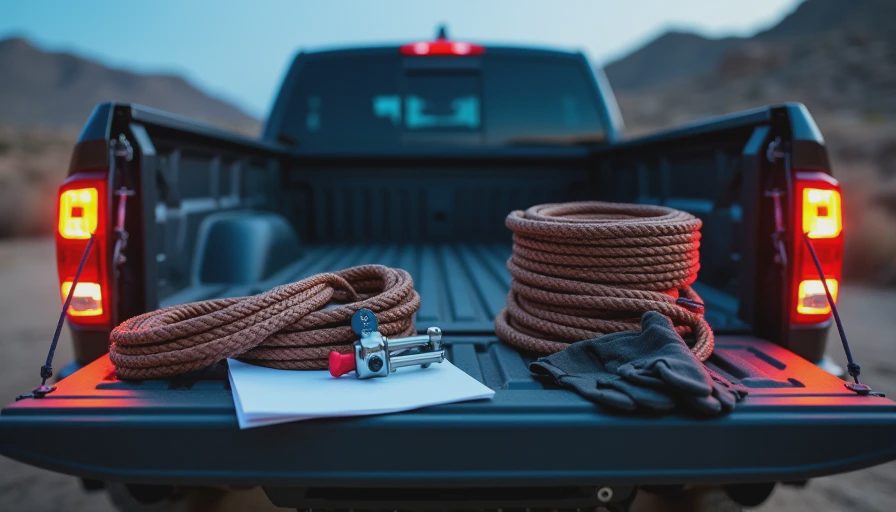
That does not remove the need for recovery dampers. I carry a dedicated winch line damper, gloves, soft shackles, and a rated tree saver. Everyone outside the vehicle stays clear of the loaded line, and the operator uses the winch in short pulls. A damper is not a permission slip to stand close. It is another layer of control.
Synthetic rope also reduces the risk of sharp burrs during inspection. A steel cable can look acceptable from ten feet away while hiding broken strands inside the outer wrap. With synthetic rope, glazing, fuzzing, cuts, and abrasion are easier to identify with a slow hand inspection. Wear gloves and run your fingers carefully; damaged fibers can still hide under mud.
Corrosion, water, and desert dust
Steel cable does not automatically fail because it gets wet, but repeated water exposure, salt, mud, and poor drying accelerate corrosion. A cable used around coastal launch ramps or winter-treated roads needs regular cleaning and lubrication. Rusted wires become stiff and brittle, then kink when the line is wound under uneven tension.
Synthetic rope does not rust. That is another practical advantage in wet country and on rigs that spend weekends crossing creeks. It can absorb water, hold grit, and suffer ultraviolet damage, so it still needs maintenance. After a dirty recovery, I spool the line out, rinse it with clean water, inspect the full length, and let it dry before packing it away. Do not pressure-wash the rope from inches away; that can force grit deeper into the fibers.
For Arizona trucks, sunlight is the bigger enemy. A rope left on the front of a vehicle year after year can fade and become brittle from ultraviolet exposure. A winch cover helps, but it does not replace inspection. The synthetic winch rope advantages over steel cable only matter if the rope is protected from the conditions that shorten its life.
Where steel cable still earns its keep
This is not a synthetic-versus-steel argument where one answer fits every truck. Steel cable remains useful for commercial recovery, logging roads, and vehicles that work around sharp volcanic rock or hot equipment. It tolerates heat better than most synthetic lines and can take more casual abuse from dragging across rough ground.
A steel line also handles poor storage better. If an owner forgets to dry it, leaves it uncovered, or winds it unevenly once, the cable may still work after inspection. That does not make neglect acceptable, but steel is less sensitive to ultraviolet exposure than synthetic fiber.
The downside is familiar: weight, kinks, rust, broken wires, and unpleasant handling. If the line has a permanent birdcage, deep corrosion, or multiple damaged sections, retire it. A 20-minute inspection is cheaper than a failed recovery beside a creek with no cell service. The right material depends on the vehicle, terrain, winch rating, and how disciplined the crew is about maintenance.
Choosing and installing synthetic rope correctly
Start with the winch rating and the manufacturer’s recommended rope diameter. Common off-road sizes include 3/8-inch and 7/16-inch, but diameter alone does not tell you the rope’s quality or minimum breaking strength. Buy from a reputable recovery supplier that publishes specifications, not from a listing that only says “heavy duty.”
Your fairlead matters. A steel hawse fairlead designed for synthetic rope should have a smooth, rounded surface with no burrs. A damaged fairlead can saw through fibers one pull at a time. Some systems use an aluminum fairlead, which can be light and smooth but still needs frequent inspection after rock contact.
Install the rope so it spools evenly across the drum. Keep at least several wraps on the drum during a recovery; the attachment point should not carry the entire load. The first winding should be tight and controlled, preferably under moderate tension. A loose first layer can pull down into the drum and pinch the rope.
My field checklist before trusting the line
Before a trip, pull out enough rope to inspect it from end to end. Look for melted or glossy sections, flattened areas, cuts, stiff spots, severe fuzzing, and discoloration. Check the eye splice and protective sleeve especially closely. Confirm that the hook or soft-shackle connection is rated, and make sure the winch drum bolts and fairlead hardware are tight.
Pack a line damper, tree saver, rated shackles, gloves, and a spare recovery strap. Keep the rope covered when the rig is parked, and rinse it after a muddy or salty recovery. If you are unsure whether damage is cosmetic or structural, retire the rope or have it evaluated by the manufacturer. A replacement line commonly costs far less than a damaged winch, grille, or hand.
The synthetic winch rope advantages over steel cable add up for the typical overland rig: lower front-end weight, easier handling, cleaner inspection, and better corrosion resistance. I would choose a quality synthetic rope for a recreational 4Runner, Tacoma, or Jeep that sees regular trail recoveries. I would choose steel for a hard-working truck exposed to extreme heat and constant abrasion. Either way, the rule stays simple: inspect the gear before the trail, use recovery hardware correctly, and never stand near a loaded line. If it has not broken in the backcountry, I do not recommend it.