Learning how to choose a portable air compressor for tires starts with the rig, not the product photo. A compact compressor that fills a stock crossover tire in a driveway can become a hot, wheezing paperweight when asked to air up four 35-inch tires after a day in sand. I have watched compressors quit beside the Mojave Road because somebody bought by peak PSI instead of usable airflow. That is an expensive walk back to the truck.
For off-road work, the right compressor must match your tire volume, pressure targets, electrical system, and patience. You do not need the biggest unit on the internet. You need one that can finish the job without melting its wiring or tripping its thermal protection.
Start with tire size and trail use
The first step in how to choose a portable air compressor for tires is estimating how much air each tire holds. A 265/70R17 all-terrain tire is a manageable load for many 12-volt compressors. A 37-inch mud tire carries substantially more air and takes longer to inflate. Four tires multiply that workload, especially if you air down to 16 or 18 PSI for rocks and return to 34 PSI for pavement.
A driver who leaves the pavement twice a year can get by with a small compressor rated around 1.5 to 2.0 cubic feet per minute, or CFM, at a useful pressure. Someone running 33-inch or larger tires every weekend should look for roughly 2.5 to 6 CFM, depending on budget and recovery expectations. Those numbers are not interchangeable with “150 PSI” on the box. Maximum pressure tells you where the compressor stops; CFM tells you how quickly it moves air.
Think about terrain, too. Sand recoveries often require repeated airing up and down. On the White Rim or a long desert route, a compressor that needs a 30-minute cool-down between tires is not a bargain. It is an appointment you did not plan for.
Check duty cycle before chasing PSI
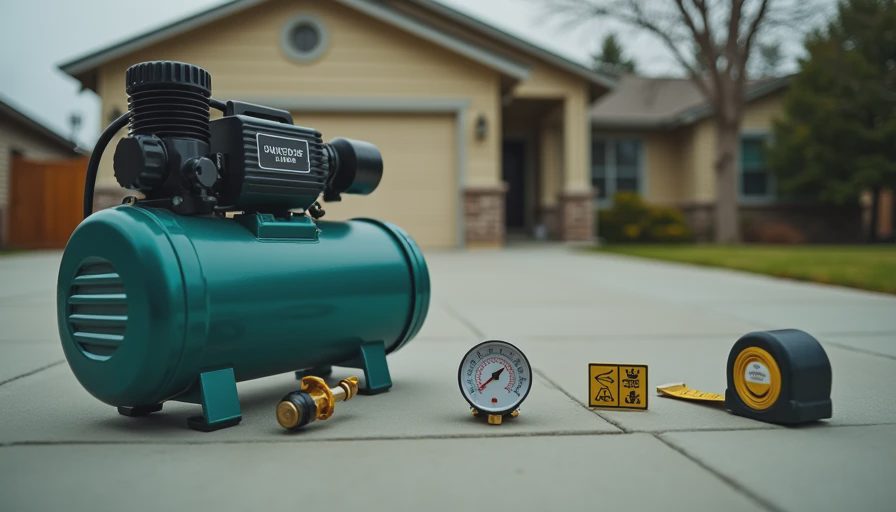
Duty cycle is the amount of time a compressor can run during a stated period before it needs to cool. A unit advertised with a 33 percent duty cycle might run for about 10 minutes during a 30-minute period. That can work for smaller tires, but it is a poor match for a heavy overland rig if you want to air up four tires consecutively.
For a Jeep with 31-inch tires, a 10- to 15-minute total inflation session may be realistic with a capable portable unit. A loaded 4Runner or Tacoma on 35s can demand 20 minutes or more, depending on starting pressure and tire construction. Look for a compressor with thermal protection, a metal cylinder head, and a cooling fan that actually moves air. Plastic housings are not automatically bad, but a tiny fan buried inside a sealed case is a warning sign.
Do not confuse a high duty-cycle rating with permission to ignore heat. Place the compressor on bare ground or a metal bumper, keep the vents clear, and shut it down if the motor sounds strained. A burned motor is easier to diagnose than a melted power lead, but neither belongs beside a trailhead.
Match the compressor to your electrical system
Most serious portable tire compressors use a 12-volt connection and pull more current than a cigarette-lighter socket can safely provide. Small units might draw 10 to 15 amps. Larger Viair, ARB, or Smittybilt-style units can pull 30 amps or more. That is why the better compressors use alligator clips connected directly to the battery rather than a dashboard plug.
Check the fuse size, wire gauge, and connector condition before the trip. A compressor rated for 40 amps needs a circuit built for that load. Thin extension leads create voltage drop, making the motor work harder and heating the cable. I prefer a short, heavy-gauge lead with a sealed inline fuse. It stays cooler and is less likely to fail after dust and water crossings.
If you have an onboard air system, a portable compressor can still serve as backup. A hard-mounted twin compressor is faster and cleaner, but it costs more, takes installation space, and cannot easily help another vehicle. Portable equipment earns its place when the group includes several rigs or when a trail repair requires air away from the vehicle.
Look at hose length, fittings, and controls
Hose details decide whether an air-up is simple or irritating. A hose around 20 feet long can reach all four tires without moving the compressor, especially on a truck. A shorter hose forces you to position the unit repeatedly on muddy or rocky ground. Heat-resistant rubber or braided hose is preferable to a stiff plastic line that kinks in cold weather.
A good gauge should be readable in direct sun and accurate enough for trail work. Digital gauges are convenient, but a simple analog gauge can survive abuse and does not need batteries. An automatic shutoff is useful when you are filling to a consistent road pressure, though I still verify the final reading with a separate tire gauge.
Watch for screw-on chucks that leak or become difficult to remove from hot valve stems. A locking chuck is faster. A built-in bleed valve is useful when you overshoot pressure by a few PSI. These small features do not look exciting in a catalog, but they save time at mile marker 42 when the wind is blowing dust under your truck.

Portable compressor features worth paying for
When deciding how to choose a portable air compressor for tires, spend money on construction and serviceability before digital decoration. A replaceable air filter matters in desert country. So do rubber feet, a protected switch, sealed connectors, and a carrying case that keeps the hose from collecting grit.
A compressor with an integrated tank can deliver short bursts of air for reseating a bead or running a small air tool, but the tank adds weight and does not replace adequate CFM. For ordinary tire inflation, direct drive is usually simpler. If bead seating is part of your recovery kit, carry a dedicated air tank or use a compressor designed for that job rather than expecting a small emergency unit to perform miracles.
I also want a manual, replacement parts availability, and a warranty from a company that lists real technical specifications. If the product page only shows “maximum PSI” and a glossy photo, keep shopping. A useful specification sheet identifies current draw, airflow at pressure, duty cycle, hose length, fuse requirement, and operating temperature limits.
A field-tested buying checklist
Here is how to choose a portable air compressor for tires without getting trapped by advertising:
- Measure your largest tire and choose for the heaviest vehicle load, not the stock configuration.
- Find the CFM rating at working pressure, not only the maximum PSI figure.
- Choose a duty cycle that can handle four tires in one session.
- Confirm whether the compressor uses battery clips or a lighter plug.
- Match the fuse, cable, and connectors to the listed current draw.
- Select a hose long enough to reach every valve without relocating the unit.
- Carry a separate, reliable tire gauge and a valve-core tool.
- Test the compressor at home from your lowest trail pressure to your normal highway pressure.
That last test matters. Time each tire, feel the cable after the run, and listen for changes in motor speed. If it takes 12 minutes to fill one tire in the garage, it will not become faster beside a washboard road at 105 degrees.
My practical recommendation
For stock SUVs and occasional gravel roads, a compact 12-volt compressor with direct battery leads, a 15- to 20-foot hose, and honest airflow around 2 CFM can be enough. For 33- to 35-inch tires, I would step up to a heavier unit with a stronger duty cycle and at least 2.5 CFM at working pressure. For 37s, trailers, or group travel, a twin-cylinder compressor or hard-mounted system makes more sense.
The best answer to how to choose a portable air compressor for tires is the one that finishes your actual air-up before heat, darkness, or weather becomes a problem. Test it, label the fuse, pack a spare valve core, and store the compressor where dust cannot reach the intake. If it has not broken in the backcountry, I do not recommend it—but even a proven compressor needs the right wiring and realistic expectations.