Ask ten overlanders at Overland Expo what the single best upgrade for a truck is, and nine will say 35 inch tires. I used to be one of them. Then I spent three years running 35s on everything from a stock-geared Tacoma to a regeared Jeep on the trails around Flagstaff — Schnebly Hill, Broken Arrow, the Mogollon Rim — and I've got the bent tie rods, cooked diffs, and shredded fender liners in the Parts Graveyard to prove it. Here's the honest breakdown of what 35s actually do to a rig, the real cost, and what breaks when you get it wrong.
Why 35 Inch Tires Earn Their Keep
There's a reason 35s are the default answer when someone asks what to do first. They add roughly two inches of static lift at the axles over a stock 31- or 32-inch tire, and that translates directly into approach angle and breakover angle on the trail. Ledges that used to smack your diff now clear by a few inches, and washboard roads feel like pavement. On a Jeep Wrangler Rubicon or a late-model Tacoma, 35s are the sweet spot: big enough to matter, small enough that you're not re-engineering the whole suspension. But the tire is only the start. The moment you bolt them on, the gearing, the suspension, and the spare tire mount all have to catch up.
The Gearing Math Everyone Skips
Here's what nobody at the tire shop tells you: 35 inch tires change your effective gear ratio, and if you're on factory 3.73 or 3.91 gears, the truck will feel dead off the line. You'll downshift on every grade, the transmission will hunt on the highway, and at 7,000 feet elevation in July, your diff temp climbs fast. The fix is regearing to 4.56 or 4.88, and it runs $1,200 to $2,000 per axle. I've watched drivers cook diffs running 35s on stock gears near the Schnebly Hill switchbacks. Regeared, the same truck feels like you added an engine. If you're not ready for that bill, stay at 33s and be happy.
Lift, Clearance, and the Fender Liner Tax
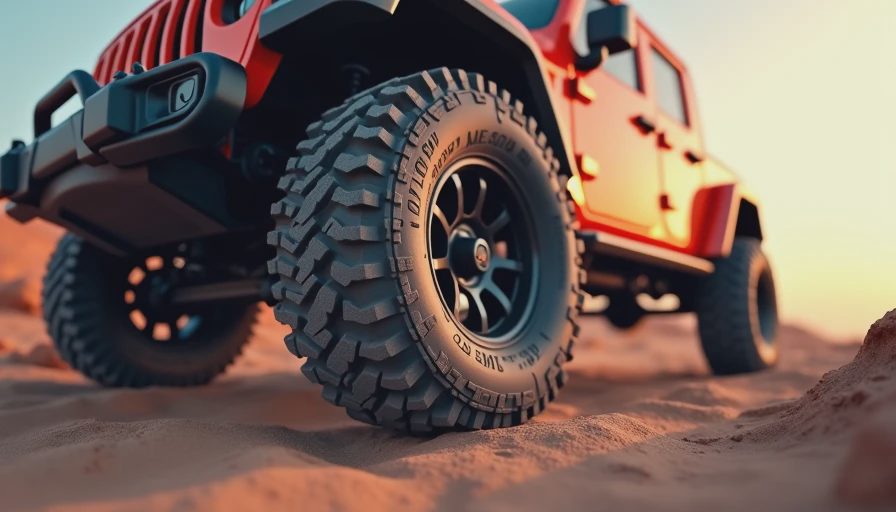
The second surprise is the lift. Most trucks need two to four inches of suspension lift to fit 35s without rubbing at full flex, and that's where the fender liner tax comes in. On my Tacoma, I did a body mount chop and trimmed the cab before the tires would stop grinding at full lock. On the Jeep, it took new lower control arms and a quick bumper trim. Twelve years in the shop and I still measure twice, because 35 inch tires will find the one spot you didn't cut — usually at full compression in a rock garden, exactly where you don't want to be stuck. Quality coilovers like Icon or Camburg fix most of the geometry, but they push the build another $2,000 to $3,500. A budget spacer lift gets you off the pavement, but it won't survive a week of real trails.
Tire Models That Survived My Trails
The tire brand debate never ends, so I'll stick to what I've run on the ground. BFGoodrich KO2s in 35x12.50R17 are the benchmark: they wear well on pavement, and I've aired them down to 15 psi on the Mogollon Rim without a sidewall failure. The Nitto Ridge Grapplers look great and bite hard in mud, but I cut a sidewall on a sharp ledge near Sedona and was glad I had a spare. Toyo Open Country MTs have been the toughest on sharp granite. And the Mickey Thompson Baja Boss tires are what sits on my trail rig now. When you shop for 35 inch tires, compare load ratings and ply counts, not just tread. A C-load tire rides softer but punctures easier. An E-load tire will outlast your shocks. And buy five, not four, because that spare is now a 90-pound problem you have to carry somewhere.
Air Down, or Stay Home
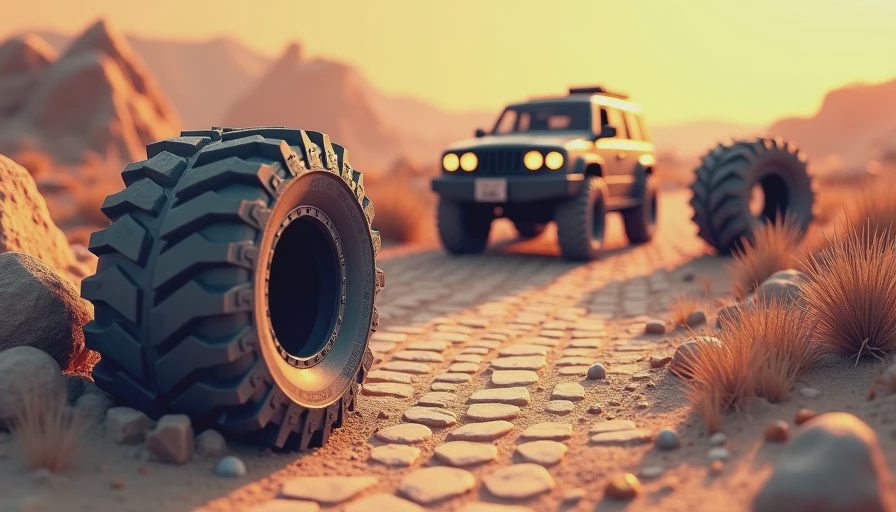
Airing down is where big tires earn their keep. On the street, run 28 to 32 psi. On rocky trail, drop to 12 to 15 psi, and the footprint grows to the size of a dinner plate — you'll crawl over ledges that would bounce you sideways at full pressure. A good onboard air compressor, like an ARB twin, is the best $400 you'll spend. Carry a plug kit too, and check your factory jack before you need it: with 35s, the stock bottle jack often won't lift the axle high enough to swap a tire. Test it in the driveway, not on a trail at dark.
What Nobody Tells You About Daily Driving 35s
If the truck is your daily driver, budget for the lifestyle change. Expect to lose 2 to 3 mpg on the highway, and your speedometer will read about 5 mph shy at 65 unless you recalibrate. Steering gets heavier, braking distances grow, and the parking garage you used to use now has a clearance problem. Five quality 35s run $1,500 to $2,500 before mounting and balancing, and that's not counting the lift, the regear, or the compressor.
Is it worth it? On the trail, absolutely. I've crossed stretches of the Arizona backcountry in 35s that I wouldn't attempt on 33s, and I've recovered enough drivers whose rigs couldn't clear a ledge to know the difference. Just don't bolt on big tires and expect the rest of the truck to keep up. Budget the whole swap, do the gearing, buy the onboard air, and carry a real spare. If it hasn't broken in the backcountry, I don't recommend it.