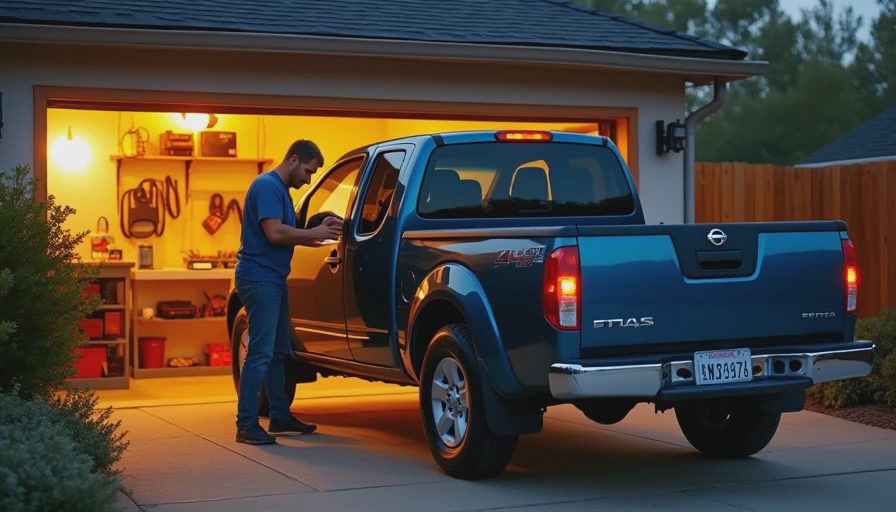
The 2004 Nissan Frontier is one of those trucks that keeps showing up in my shop because it does the job without a lot of drama. If you are shopping coverage for a 2004 Nissan Frontier, the sweet spot is usually simple: enough protection for the truck, enough coverage for the gear in the bed, and no wasted money on limits that outrun the truck's actual value. I have seen these rigs run work duty, haul dirt bikes, and take washboard roads with a lot less fuss than some newer pickups. That matters when you call for a quote, because insurers price a plain old truck differently than a lifted weekend toy.
Why a 2004 Nissan Frontier stays affordable to insure
A 2004 Nissan Frontier is not a high-strung turbo pickup or a luxury four-door with sensors on every corner. The common 2.4-liter four-cylinder and 3.3-liter V6 are straightforward to repair, and parts are still easy enough to find at salvage yards and on RockAuto. That usually keeps claim costs down. Insurance companies care about how expensive a truck is to fix, how likely it is to disappear from a parking lot, and how bad the injuries could be in a crash. A shorter, older Frontier generally lands in the lower end of that pile.
In practical terms, I would expect a clean driver with a decent record to see liability-only pricing in the low hundreds per six months in some states, and more like a few hundred extra if collision and comprehensive still make sense. The spread is wide because zip code, age, miles, and driving history matter more than the badge on the grille.
Coverage that actually matters on an older truck
Liability is the floor. If you cause a crash, it pays for the other side's injuries and property damage up to your limits. For an older pickup that is paid off, that is the piece nobody should skip. Collision is the next call. It pays to fix your truck after you hit a tree, a pole, or another vehicle, minus your deductible. Comprehensive handles the ugly stuff that is not a crash: theft, hail, vandalism, glass, fire, and a deer that thinks the bumper is a suggestion. If a 2004 Nissan Frontier is low market value, collision can still be worth it when replacement would hurt.
The part people miss is accessory coverage. A steel bumper, winch, canopy, rooftop tent rack, bed drawer system, or a set of sliders is not always covered just because the truck is insured. On many policies, custom parts and equipment coverage has a cap unless you buy more. If you have $3,000 to $7,000 tied up in gear, spell it out when you quote the policy and keep receipts or photos. That saves ugly phone calls after a roll-over or theft.
What off-road mods do to the quote
A mild lift does not automatically blow up a premium, but it can change how the carrier sees the truck. Bigger tires, a suspension kit, lockouts, a bed rack, and recovery gear all raise the replacement value. When a 2004 Nissan Frontier has a 3-inch lift and 33s, the truck is no longer priced like the base model sitting on stock steel wheels. A few carriers are fine with honest off-road use. Others will get twitchy if the vehicle is a daily driver that sees mud, rock gardens, and towing. The clean answer is to describe the truck exactly, not the way you hope it looks on paper.
I have watched claims get delayed because the owner told the agent 'stock truck' and then tried to sort out a bumper, winch, and topper after the fact. That is how you turn a minor payout into a fight. Give the insurer the mileage, garaging ZIP, annual miles, trim, 4x4 status, and every accessory worth real money. If the truck has a camper shell or a bed cap, say so. If it has aftermarket lighting, say that too.
The claims I see most on a trail truck
Most losses on an old midsize pickup are boring on paper and expensive in real life: parking-lot hits, cracked windshields, hail, catalytic converter theft, and people backing into beds and bumpers. Off-road damage is a different bucket. A torn sidewall, bent wheel, or smashed tail light from a bad line is usually a maintenance problem unless the policy specifically covers it. That is why I tell people to separate truck value from gear value. The truck gets one number, the accessories get another, and the policy needs to reflect both.
How I would quote one for a driver today
Start with the VIN, not a vague trim guess. Then price the truck two ways: one with liability-only coverage, and one with collision plus comprehensive and a deductible you can actually pay out of pocket, usually $500 or $1,000. If the truck is worth $5,000 and a clean replacement would be hard to find, full coverage may still be smart. If the truck is rusty, high-mileage, and mostly a trail mule, liability plus a solid roadside plan can be the better spend. On a 2004 Nissan Frontier that is mostly a trail mule, I care less about paint and more about whether the cab, frame, and drivetrain are worth saving.
For shopping quotes, the fast online carriers are easy to test, but I would still compare at least two direct insurers and one agent-based company. GEICO and Progressive are built for quick web quotes. State Farm and Allstate often work better if you want to talk through mileage, accessories, and the way the truck is actually used. The point is not loyalty. The point is getting the same truck described the same way everywhere.
A quick field test for whether you are overinsured
I use a simple rule on older trucks: if the annual premium for full coverage is close to 20 percent or more of the truck's real market value, the math starts getting ugly. That does not mean you drop everything automatically. It means you look hard at whether the truck would still hurt to replace. A clean 2004 Nissan Frontier with a manual transmission, 4x4, and decent rust-free bodywork can still justify more protection than the rough one sitting on steelies behind the shop.
If you run the truck into the dirt, keep the paperwork clean too. Photograph the truck from all four corners, the odometer, the VIN plate, the tires, and any gear that is not factory. Save receipts in a folder or cloud drive. When something breaks, you want proof before the claim adjuster starts asking questions. That is the whole game: document the truck now so you are not trying to reconstruct it after a bad day. If it hasn't broken in the backcountry, I don't recommend it.