A winch hitch mount gives a 4x4 owner a removable recovery winch without permanently bolting a winch plate to the front bumper. That sounds simple until you are nose-down in a muddy wash, trying to move 5,500 pounds of Toyota and camping gear with a mount that was designed for a farm trailer. The receiver, pin, fairlead position, wiring, and winch capacity all matter.
I have used portable winch systems on forest roads around Flagstaff and on rocky routes where a fixed bumper winch was not practical. The good setups were controlled, centered, and easy to secure. The bad ones twisted at the receiver, dragged the cable across a sharp edge, or forced the operator to stand in the mud while searching for a missing hitch pin. If it has not broken in the backcountry, I do not recommend it.
How a winch hitch mount works
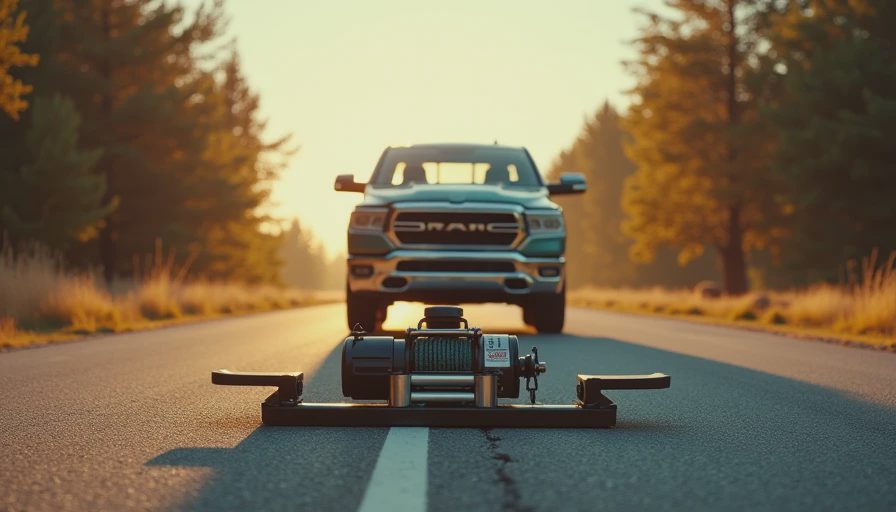
A typical winch hitch mount uses a steel cradle with a square tube that slides into a vehicle's receiver. The winch bolts to the cradle, and a hitch pin locks the assembly in place. Many systems include a front and rear receiver option, allowing the same winch to pull from either end of a truck or SUV.
The receiver size is the first checkpoint. A 2-inch receiver is common on full-size pickups, midsize trucks, and many SUVs. Some heavy-duty trucks use a 2.5-inch or 3-inch receiver. An adapter can reduce a larger receiver, but the adapter becomes another connection that must be rated, fitted tightly, and inspected. Do not assume a 2-inch shank belongs in every receiver.
A winch hitch mount is not automatically rated for the full capacity of the winch. Look for a clearly stated vertical and pulling capacity from the manufacturer. The mount must handle the winch's frame, line pull, shock loading, and the leverage created when the vehicle is angled away from the anchor. A 9,500-pound winch on a light-duty cradle can create a false sense of security.

Choosing the right capacity and fit
Start with the loaded weight of the vehicle, not the curb weight printed in a brochure. Fuel, skid plates, tools, water, a roof tent, spare tires, and recovery boards add up quickly. A common rule is to choose a winch rated at least 1.5 times the vehicle's gross weight for a practical first-layer pull. That is not a substitute for careful rigging, but it gives the winch useful margin.
For a 4,500-pound 4Runner carrying expedition gear, a 9,000- to 10,000-pound winch is a sensible range. A heavily loaded three-quarter-ton truck might need a 12,000- to 16,500-pound unit, along with a heavier cradle and stronger receiver structure. Brands such as Warn, Superwinch, and ComeUp make widely used winches, but the winch brand cannot compensate for a weak mount.
Check bolt spacing before ordering. Common winches use different mounting patterns, and some portable systems require a specific cradle rather than a universal plate. Confirm the drum clears the side plates, the clutch handle remains reachable, and the motor does not contact the receiver or bumper. A winch hitch mount that fits on paper can still be unusable when the cable exits at the wrong height.
Receiver strength and recovery angles
The receiver is only as strong as its attachment to the frame. Inspect the receiver crossmember, mounting bolts, welds, and any visible corrosion. Factory receivers are generally a better starting point than a thin aftermarket unit, but inspect them anyway. On a previous recovery near the Mogollon Rim, the winch cradle survived while a loose hitch pin allowed enough movement to hammer the receiver hole oval. The pin was not the failure, but neglect made it part of the failure chain.
Keep the pull as straight as possible. A winch hitch mount works best when the cable leaves the fairlead in line with the receiver. A severe side pull applies twisting force to the cradle and receiver. If the anchor is off to one side, use a snatch block or reposition the vehicle rather than dragging the winch sideways. A tree saver, rated shackles, and dampener belong in the system too.
Never use a trailer ball as a recovery anchor. The ball stem can bend or shear, and the loose hardware can become a high-energy projectile. Use a rated recovery point or a properly rated shackle connected to a recovery receiver insert.
Installation and wiring details that matter
Before the trip, install the winch on the cradle and test the entire assembly in the driveway. Slide the mount into the receiver, insert the pin, and verify that the pin fully passes through both sides. Use a locking pin for transport, but do not treat a small anti-rattle clamp as a structural component.
Wire length is another common problem. A portable winch needs enough cable to reach the battery or a properly designed rear connection without rubbing on the exhaust, driveshaft, steering, or sharp body seams. Use appropriately sized cable, protected terminals, and a fuse or breaker when specified by the winch manufacturer. Route cables away from heat and secure them so vibration cannot work a terminal loose.
Do not make a permanent rear connection with undersized household cable or bargain clamps. High-current winch motors can draw several hundred amps under heavy load. A warm cable, melted connector, or weak ground can stop a recovery before the vehicle moves an inch. Test under light load and inspect for heat after use.
Field procedure before pulling
Clear people from the line path and establish a hand-signal plan before applying power. Inspect the cable or synthetic rope for abrasion, flattening, broken strands, or contamination. Confirm the anchor, shackles, and receiver insert are seated correctly. If the mount shifts, the pin bends, or the cradle contacts the bumper, stop and reset it.
Use a low, steady throttle and let the winch do the work. A snatch block can double mechanical advantage while reducing speed and increasing the amount of line needed. Keep at least several wraps on the drum; the outer layers are not the only part carrying load. Pause every few feet to check alignment and hardware.
After recovery, rinse mud from the mount, dry the receiver tube, and inspect the pin hole for elongation. Store the cradle where it cannot bounce around in the cargo area. A portable system is valuable only when it is complete, charged, wired, and ready before the vehicle is stuck.
Is a removable setup right for your rig?
A winch hitch mount makes sense for a daily-driven SUV, a vehicle shared between trail and highway use, or a rig that needs front and rear recovery options. It also saves bumper weight and lets one winch serve multiple vehicles if the cradles and wiring are correctly matched. For occasional forest-road travel, that flexibility can be worth more than a permanent front bumper winch.
The tradeoff is preparation. You must carry the winch, install it in poor weather, protect the wiring, and accept that receiver height can produce a less-than-ideal approach angle. A permanent winch plate is usually faster for frequent rock crawling, especially when the winch is integrated with a strong bumper and dedicated recovery points.
Measure the receiver, weigh the loaded rig, confirm the bolt pattern, and inspect every connection before buying. Spend money on a properly engineered winch hitch mount, rated recovery hardware, and quality wiring before spending it on decorative accessories. On a dark road outside camp, boring and strong beats clever and shiny every time.