I run guided trips out of Flagstaff, Arizona. When the monsoon hits, forest roads turn to slick, red grease that swallows stock tires whole. I've tested more mud tires in the last six years than most shops sell in a decade. The best mud tires for off road driving are not the ones with the most aggressive tread blocks in the catalog. They're the ones that keep pulling after two hours of axle-deep goo, then still ride on pavement at seventy without making you brace for a shimmy.
If you're shopping for a set, here's what I've learned from breaking tires, cutting them open, and winching rigs out of the muck.
What Separates a Mud Tire From a Highway Tire
A real mud tire has two jobs. It has to dig down to firm ground, and then it has to clear the mud out of its own tread lugs. If the lugs stay packed, you're driving on four greased cupcakes. Tread void is what does the digging. Look for big, widely spaced blocks with deep shoulder lugs that wrap onto the sidewall. That's what lets a tire bite into muck instead of sliding on top of it.
Sidewall strength is the other thing I check first. Rocks and buried stumps don't care about your tire's looks. I've run three-ply sidewalls that shrugged off sharp talus on the Mojave Road, and two-ply sidewalls that split open on a chunk of basalt the size of a football. When you're thirty miles from pavement, sidewall thickness is not a spec sheet detail. It's a survival item.
Expect to pay for that capability. A solid mud-terrain tire runs from about $230 to $420 per tire depending on size and brand. It's not cheap, but replacement winch cable and a full day of recovery are not cheap either.

My Picks for the Best Mud Tires for Off Road Driving
I don't recommend a tire unless it's survived my kind of abuse. These three have made it home without a trip to the parts graveyard.
First up is the BFGoodrich Mud-Terrain T/A KM3. It's the tire I put on my own truck when I know the route is going to be nasty. The KM3's tread digs deep in mud and hooks up on slick rock better than anything else I've run. It also wears reasonably well on pavement, which matters when you drive two hours to reach a trailhead. Expect to pay around $300 to $420 a tire in common sizes.
Next, the Toyo Open Country M/T. This is the tire I recommend to overlanders who carry a heavy load. The sidewall is brutal and shrugs off cuts that would kill a softer tire. It runs quiet enough for a daily driver, and it wears like iron. The tradeoff is weight. You'll feel it in acceleration and fuel mileage, but if you're crossing the Mojave with a loaded camper, it's worth it. Prices sit around $270 to $380.
Third, the General Grabber X3. This is the value pick that still earns its keep in the mud. It clears mud quickly, bites well in wet grass, and the price tag is friendlier than most. You give up some high-speed comfort on the highway, but for a weekend wheeler that sees serious mud, it's tough to beat. It typically lands between $230 and $340.
That's the short list I trust after years of testing. When someone asks me for the best mud tires for off road driving, those three are the names I say out loud.
How to Size and Air Down Without Overthinking It
Bigger is not automatically better. A 37-inch tire on stock suspension is a recipe for rubbing and broken parts. Stay within the size your rig was built for unless you've geared and lifted it properly. If you have to cut the fenders, you've gone too far.
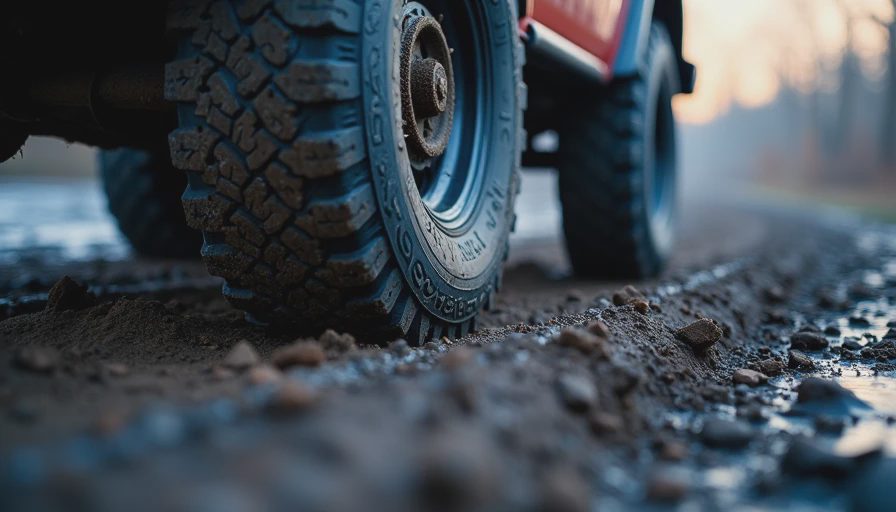
Air pressure matters more than most people think. On the trail, drop to about 15 to 18 psi for a full-size vehicle, and lower if you're in deep sand or snow. That drops your footprint and lets the tire wrap around rocks instead of bouncing over them. Just remember to air back up before you hit pavement at speed, or you're looking at heat damage and a ruined tire.
Mistakes That Leave You Stuck
The first mistake I see is airing down too late. People wait until the tire is spinning in the mud before they let air out. Do it before you enter the rough stuff. It's easier and safer. The second mistake is chasing a look instead of a load rating. If your camper or bumper adds weight, you need a tire with the right load index. Don't run passenger-rated tires on a heavy rig. The third mistake is not doing a trial fit. Mount one tire and check clearance at full lock and full compression before you buy the set. It sounds obvious, but I've watched more than one driver return a full set at the trailhead.
Buy once. Buy a tire that's actually meant for the terrain you drive. If you wheel in deep mud regularly, these picks will get you through. If you spend most of your time on gravel and pavement, a good all-terrain might make more sense. But if you want to point at the worst mud hole on the trail and go through it, you already know what to buy.
The best mud tires for off road driving get you home after a day when everything goes sideways. That's the only test that counts.