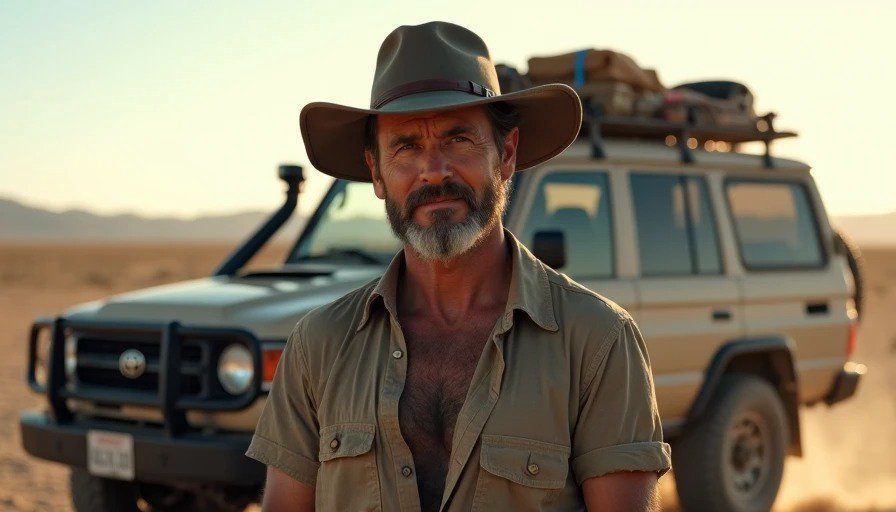
I live in Flagstaff, Arizona, because it sits at the intersection of three things I can't live without: the Mojave Desert, the edge of the Grand Canyon, and the backcountry of southern Utah. One hour east, I'm in the pines. One hour west, I'm in the sand. And every time I leave the pavement, I take a rig that I built, tested, broke, and fixed myself.
That's not a flex. That's the only way I know how to do this.
My name is Travis McCall. For twelve years, I worked in off-road shops — started sweeping floors, ended up as technical director. I've installed more lift kits than I can count, welded roll cages for rigs that crossed the Rubicon and the Continental Divide, and I've watched parts catalogs promise the world and deliver a tow truck bill. Somewhere around year ten, I realized I'd rather break my own stuff in the dirt than install someone else's parts in a shop. So I walked away from the bay and started guiding overland expeditions.
Now I lead trips across the Southwest. Three days, ten days, however long it takes to get from one point to another without touching pavement. My wife Maggie runs logistics — permits, parts procurement, satellite comms. My eight-year-old son Leo can already spot a bad tie-rod end from across the garage. Our dogs, Tread and Diff, have more trail miles than most people I know.
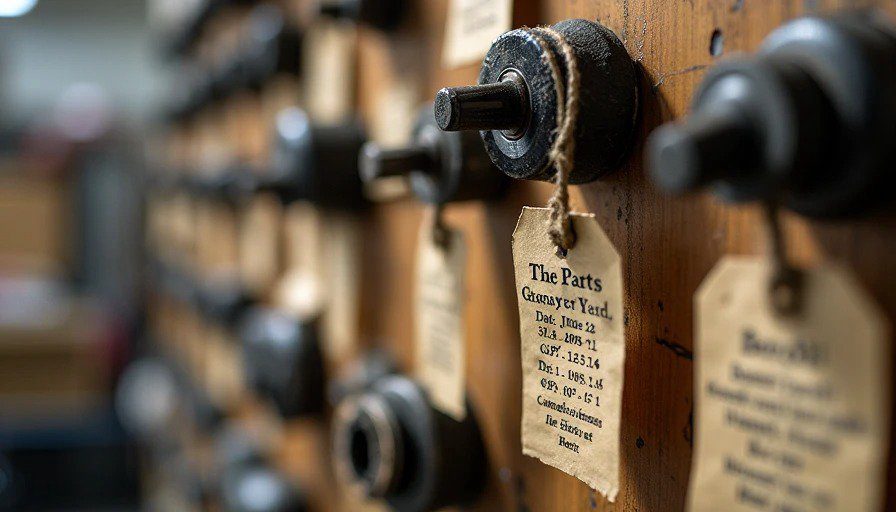
And when something breaks on the trail — and it will — I don't just replace it and move on. I bring it home. I cut it open. I figure out exactly why it failed. Then I hang it on the wall of my shop with a tag: date, GPS coordinates, and cause of death.
I call it the Parts Graveyard.
Here's the only rule of this blog:
If it hasn't broken in the backcountry, I don't recommend it.
Not "I don't like it." Not "I don't trust it." I don't recommend it. Because there's a big difference between a part that works in a parking lot and a part that works at 9,000 feet, in 105-degree heat, thirty miles from the nearest paved road, with no cell service and a storm rolling in.
I've tested parts that looked bulletproof on the shelf and crumbled on the first washboard. I've seen expensive brand-name gear fail at 40 miles an hour on a dirt road — not because it was bad, but because it was the wrong tool for the job. And I've learned more from those failures than from any shiny catalog photo.
Here's what you won't find here:
Affiliate-link optimism. I don't get paid to say nice things about products. I get paid to guide people through the backcountry safely. If a part is junk, I'll tell you it's junk. If it worked, I'll tell you how and why. And if I haven't broken it and fixed it myself, I won't mention it.
Motivational quotes. The trail doesn't teach you life lessons. It teaches you that your tire pressure was too high, your line was wrong, and you should have packed more water. That's it. I'm not here to inspire you; I'm here to help you get home.
Politics. I don't care what sticker is on your bumper. I care whether your sway bar disconnects work and whether you have recovery points front and rear. That's the only conversation worth having.
What you will find here:
Trail Notes. Real trip reports from the routes I actually run — Mojave Road, the Utah Traverse, Coconino National Forest in winter, and routes that don't have names. GPS tracks, waypoints, weather conditions, and what broke along the way.
Under the Chassis. The mechanical stuff: suspension geometry, gearing math, lockers vs. limited slip, tire pressure by terrain, winch selection, dual-battery systems. This is where the twelve years in the shop pay off. I'll walk you through it like I'm explaining it to a buddy over a camp stove — clear, direct, no jargon without an explanation.
The Parts Graveyard. This is the one nobody else is doing. I cut open failed parts, photograph the damage, and tell you exactly what went wrong. Every entry has a date, a GPS coordinate, and a cause of death. CV axles, bushings, compressors, light bars, whatever died in the field. Think of it as a forensic archive of backcountry failures. If you want to avoid a $2,000 mistake, start here.
Rig Walkarounds. Deep dives into actual vehicles — mine, my clients', interesting rigs I've encountered. Mod-by-mod breakdowns with part numbers, honest assessments of what worked and what I'd do differently.
From the Driver's Seat. The opinion stuff. Trail etiquette, trip planning, gear philosophy, and the occasional rant about something that makes no sense. No preaching, no speeches — just the stuff I actually think about when I'm behind the wheel.
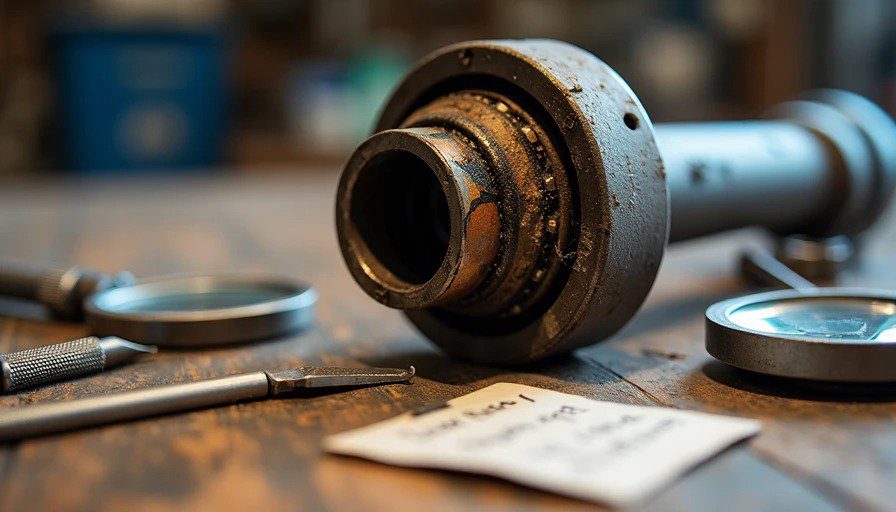
Here's a photo from the wall in my shop: a CV axle that failed forty miles into the Mojave Road last June. The tag says 105 degrees, sand, high load. When I pulled it apart, the grease had turned to paste and the inner bearing race was heat-scored — not a manufacturing defect, just the wrong part for the conditions. I ran that same route a month later with a different axle, different boot design, and it came back clean. I didn't read about that difference in a catalog. I learned it by getting stuck, fixing it, and driving out.
That's the only way to really know.
I started this blog because I'm tired of reading gear reviews written in parking lots. I'm tired of affiliate links driving recommendations. I'm tired of watching people buy expensive equipment that's not built for what they actually do.
If you're the kind of person who wrenches your own rig, reads forums until 2 a.m., and has walked home from a failure at least once, this is for you. If you're just getting started and want to learn from someone who's made the mistakes so you don't have to, this is for you too.
I don't have all the answers. I've never met anyone who does. But I have a wall full of broken parts, twelve years of experience, and a rule I don't break: if it hasn't broken in the backcountry, I don't recommend it.
That's the only promise I'll make.
Now let's get out there and break some stuff — and more importantly, learn from it.